

AI Tools Every Calisthenics Coach Should Use in 2026
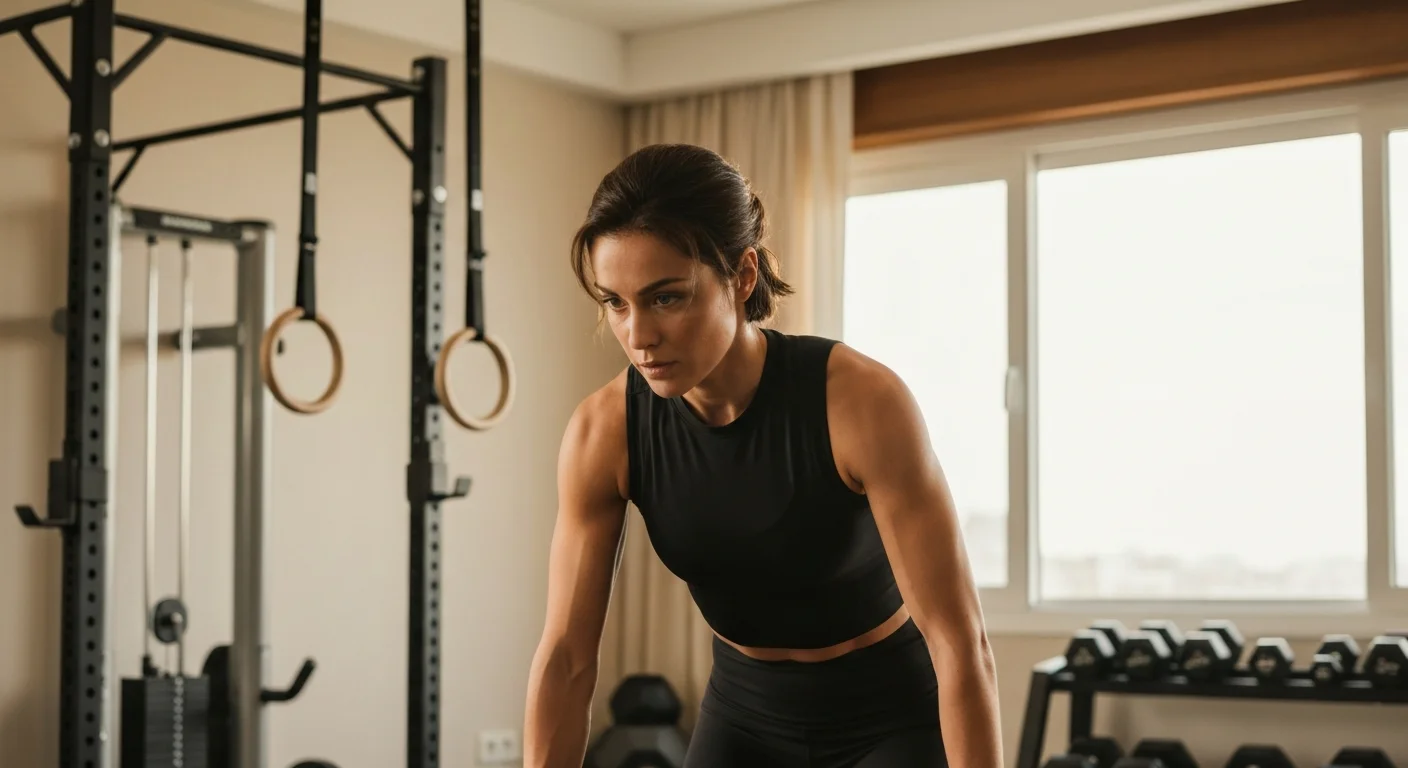
If you're a calisthenics coach in 2026, AI is no longer optional — it's the difference between a coach who works 60 hours a week and one who works 30. The coaches who win this year aren't the ones with the biggest Instagram following. They're the ones who use AI to design better programs, respond to clients faster, and free up time for the work only a human can do: in-person form correction, building trust, and creative programming.
This guide walks you through the AI tools every calisthenics coach should be using in 2026, with concrete prompts you can copy today. Whether you run a one-on-one practice, group classes, or an online coaching business, these tools will save you hours every week — without compromising the quality your clients pay you for.
Why AI Matters for Calisthenics Coaches in 2026
Calisthenics coaching has always rewarded specialists — the coaches who deeply understand bodyweight progressions, joint mechanics, and skill work. But the business side of coaching (programming, communication, marketing, admin) eats time that should be spent coaching. That's where AI shines.
A 2026 survey of independent fitness coaches found that the average online calisthenics coach spends:
- 8–12 hours per week writing and updating programs
- 5–8 hours per week responding to client check-ins and messages
- 4–6 hours per week creating social media content
- 3–5 hours per week on admin (onboarding, scheduling, invoicing)
That's 20–30 hours per week on tasks AI can dramatically accelerate. Coaches using AI tools well report cutting that to 8–12 hours, freeing time to take on more clients, run group programs, or simply work less.
The key word is well. AI is a force multiplier when you know how to prompt it and verify its output. Used carelessly, it produces generic programs and tone-deaf client messages. This guide focuses on the tools and prompts that actually work for calisthenics specifically.
1. AI for Workout Program Design
The fastest win for most coaches is using AI to draft and adapt workout programs. You'll still apply your expertise — but instead of starting from a blank page, you'll start from a solid first draft.
Best Tools
- ChatGPT (GPT-5) — Strong at structured program output, good with progressive overload logic
- Claude (Sonnet 4.6 / Opus 4.7) — Excellent at nuanced movement progressions and reasoning about contraindications
- Custom GPTs — Build one trained on your coaching philosophy and library of progressions
Example Prompt
Design a 4-week calisthenics program for an intermediate client who can do 8 strict pull-ups, 15 push-ups, and 30-second hollow hold. Their goal is their first muscle-up in 8 weeks. They train 4 days per week, 60 minutes per session, and have access to a pull-up bar and rings. Include scapular pulls, false grip work, straight-arm strength, and transition drills. Format as a weekly table with sets, reps, RPE, and rest. Add coaching notes on common form errors.
You'll get a usable first draft in 30 seconds. Spend the next 5 minutes adjusting volume, swapping exercises for client-specific needs, and adding your own programming touches. Total time: 6 minutes for a program that used to take 45.
What to Watch For
- Verify the progressions. AI sometimes invents exercise names or recommends jumps that are too aggressive. Always cross-check.
- Personalize the volume. AI defaults to "average" — your client isn't average.
- Don't let it design for skills you don't coach. If AI suggests a planche progression you've never coached, don't add it. Stick to your wheelhouse.
For coaches who want a structured walkthrough of AI program design with hands-on prompts, the free AI for Fitness Coaches course on FreeAcademy.ai covers programming, nutrition, and automation in 12 lessons.
2. AI for Client Check-Ins and Accountability
Weekly check-ins are where coaches build relationships — and where most coaches lose hours every week. AI lets you turn a 30-minute manual response into a 5-minute personalized one.
The Workflow
- Client sends weekly check-in (form, voice memo, or text)
- Paste the check-in into your AI tool with their training history and current program
- AI drafts a personalized response covering: progress, what's working, what to adjust, mindset notes
- You review, personalize, and send
Example Prompt
Here is my client's weekly check-in for week 6 of their muscle-up program: [paste]. Their training log shows they hit 4/4 sessions, logged RPE 7–8 across the board, and missed one rep on assisted muscle-ups. Last week we agreed to focus on false-grip endurance. Draft a check-in response that: acknowledges their adherence, notes their progress on false grip, gives one specific adjustment for next week, and ends with a question that opens dialogue. Match my tone: warm but technical, no fluff.
You'll get a draft that's 80% ready. Edit for accuracy and your voice. Total time saved per client per week: 20–25 minutes. Across 10 clients, that's 3+ hours back in your schedule.
Privacy Note
Never paste client identifying information (full name, email, payment info) into a public AI tool. Use first names only, and consider Claude's privacy guarantees or running models locally for sensitive data.
3. AI for Social Media Content
Calisthenics coaches live or die by content. Instagram, YouTube Shorts, and TikTok drive most new client leads in 2026. AI can take you from "I don't know what to post" to a full content calendar in 30 minutes.
What AI Does Well
- Caption writing for technique videos
- Hook generation for Reels and Shorts
- Carousel post outlines for educational content
- YouTube title and description optimization
- Content calendar planning based on training cycles
Example Prompt
Give me 10 Instagram Reel hooks for a 30-second video on "why your pull-ups stall at 8 reps." My audience is intermediate calisthenics athletes who train at home. Tone: confident, contrarian, no clickbait. Each hook should be under 12 words and work as on-screen text.
You'll get 10 usable hooks instantly. Pick the best one, film, post. Repeat for 5 topics and you have a week of content.
What AI Doesn't Replace
- Your face and your voice on camera. AI can write the hook; you have to deliver it.
- Original technique demonstrations. AI can't film your muscle-up.
- Genuine engagement in DMs and comments. Authentic replies still convert better than templated ones.
4. AI for Client Onboarding and Admin Automation
Onboarding new clients used to mean 90 minutes of intake forms, welcome calls, and program setup. AI plus automation tools can cut that to 20 minutes — most of it the actual coaching call.
The Stack
- Typeform or Tally for intake forms (free tier covers most coaches)
- ChatGPT or Claude to summarize intake responses into a client profile
- Notion or Airtable as your client database
- Calendly for scheduling
- Stripe for billing
Example Workflow
- New client submits intake form → form sends responses to email or Notion
- Paste responses into AI: "Summarize this intake into a one-page client profile: goals, current ability, limitations, training history, motivation style. Flag any red flags or contraindications."
- Get back a clean profile in 30 seconds
- Use the profile to inform your welcome call and first program
The bigger automation wins come from connecting these tools with Zapier, Make, or n8n. Auto-create a Notion page when a form is submitted. Auto-send a welcome email with a Loom video walkthrough. Auto-schedule the welcome call. The free AI for Fitness Coaches course has a full lesson on building this automation pipeline.
5. AI for Nutrition Planning
Most calisthenics coaches don't write detailed meal plans — and shouldn't, unless they're also nutrition certified. But AI can help you give clients useful nutrition guidance within your scope of practice.
What's In Scope (for most fitness coaches)
- General macro education
- Sample meal frameworks (not prescriptive plans)
- Grocery list templates
- Meal prep guidance for training days
What's Out of Scope (refer out)
- Specific calorie or macro prescriptions (in many jurisdictions, this requires a dietitian credential)
- Medical nutrition therapy
- Eating disorder support
Example Prompt
Create a 7-day sample meal framework for a 75 kg male intermediate calisthenics athlete focused on muscle gain. He trains 5 days per week. Target a 300-calorie surplus, 1.8g protein per kg bodyweight, and balanced carbs/fats. Use whole foods, vegetarian-friendly, and include training-day vs rest-day variations. Mark this as a sample framework, not a prescriptive meal plan.
Always disclose to clients that AI-generated nutrition content is educational, not prescriptive, and recommend they consult a registered dietitian for personalized plans.
6. Comparing AI Tools for Calisthenics Coaches
You don't need every AI tool. Most coaches do well with one general-purpose AI plus one or two specialized tools.
| Tool | Best For | Cost | Calisthenics Use Cases |
|---|---|---|---|
| ChatGPT (Plus) | All-purpose | $20/mo | Programs, captions, check-ins |
| Claude (Pro) | Long-context, reasoning | $20/mo | Detailed programming, client profiles |
| Gemini (Advanced) | Google integration | $20/mo | Calendar/email automation |
| Perplexity | Research with citations | Free / $20/mo | Research-backed content, exercise science |
| Custom GPT | Branded coaching assistant | Included with ChatGPT Plus | Trained on your philosophy |
| Descript | Video editing with AI | $24/mo | YouTube/Reels editing, transcription |
| ElevenLabs | AI voice for content | $5–22/mo | Voiceovers for Reels |
Our recommendation: Start with ChatGPT Plus ($20/mo) for everything. Add Claude Pro if you want a second opinion on programming or detailed long-form work. Skip the rest until you have a specific need.
7. Where to Learn AI for Coaching Properly
The fastest way to get good at AI as a coach is structured practice. Two free resources we recommend:
- AI for Fitness Coaches — Free Course — 12 lessons covering programming, check-ins, social content, custom GPTs, onboarding automation, and nutrition. Free certificate on completion.
- How to Become a Calisthenics Coach: Career Guide — If you're not certified yet, start here.
For coaches who want a deeper credential in calisthenics-specific coaching alongside AI fluency, the Calisthenics Instructor Certification covers programming, anatomy, and progressions — pair it with the AI course for the modern coach skill stack.
Final Thoughts: AI Augments, Not Replaces
The coaches who panic about AI replacing them are usually the ones treating coaching as a transaction — sell a PDF program, never speak to the client. Those coaches will be replaced, by AI or by better coaches.
The coaches who'll thrive in 2026 are the ones using AI to handle the repetitive work so they can do more of what AI can't: see a client live, feel when they're holding back, correct their scapula by hand on a pull-up bar, or notice the small mindset shift that unlocks their muscle-up. AI is a tool. You're still the coach.
Pick one workflow from this guide. Try it this week. Save your hours, then spend them on the coaching only you can do.
Frequently Asked Questions
Should calisthenics coaches use AI to write entire programs?
No — use AI to draft programs, then apply your coaching expertise. AI is excellent at structure, volume distribution, and progressive overload patterns. It's mediocre at understanding your specific client and weak at coaching cues. The best workflow is: AI drafts, you personalize, client receives a program that's better than what either of you would have produced alone.
Is it ethical to use AI for client check-ins?
Yes, when used transparently. AI helps you draft a more thoughtful, personalized response than you'd write at 11pm after a long day. You still read every check-in, edit every response, and take responsibility for the advice. What's not ethical: pasting checked-in client data into public AI tools, or using AI to fake personal attention you're not actually giving.
Which AI tool is best for calisthenics programming specifically?
For most coaches, Claude edges out ChatGPT for programming because of its longer context window (you can paste a client's full training history) and stronger reasoning about progressions and contraindications. ChatGPT is faster and better for content/marketing tasks. Use both if budget allows; use ChatGPT alone if not.
Will AI replace calisthenics coaches?
No. AI will replace coaches who only sell static PDF programs. It will not replace coaches who provide live form correction, in-person teaching, accountability, motivation, and personalized adjustment based on what they see and feel. The coaching profession is shifting toward the human-only skills — and those become more valuable as AI handles the rest.
How long does it take to learn AI tools for coaching?
The basics — writing good prompts, getting useful programs and check-in drafts — take about 5–10 hours of focused practice. Advanced workflows (custom GPTs, automation pipelines, AI-augmented content systems) take 20–40 hours. The free AI for Fitness Coaches course is designed to get you to functional in about 3 hours of structured learning.
Do I need to disclose AI use to my clients?
There's no universal standard yet, but transparency builds trust. We recommend telling clients something like: "I use AI tools to draft and structure parts of your program and check-ins, so I can spend more time on the parts of coaching that need human judgment — your form, your progress, and the conversations we have. Every recommendation you receive has my eyes on it." Most clients appreciate the honesty, and many find it reassuring rather than concerning.
🎓 Want to become a certified instructor?
Learn the science behind it with our FREE Calisthenics Instructor Certification: anatomy, kinesiology and program design in 15 lessons. Create a free account and earn your certificate!