

Calisthenics Trainer: What They Do & How to Hire One
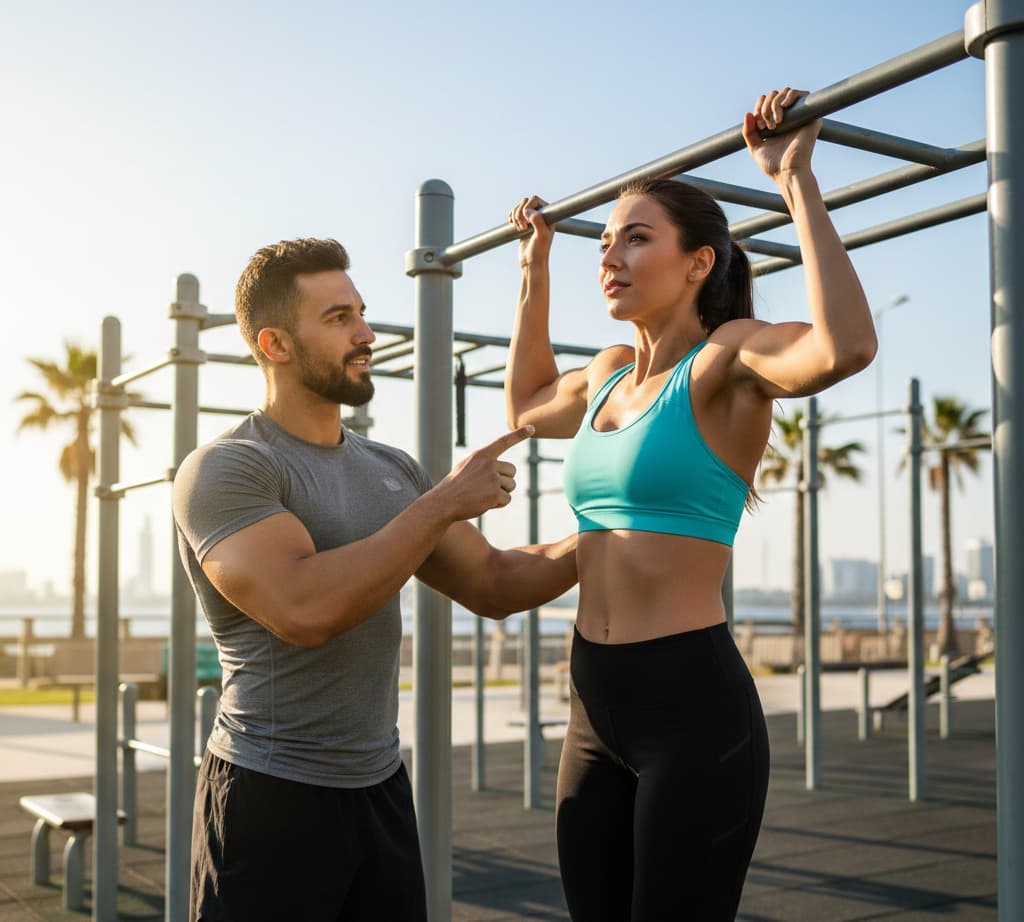
A calisthenics trainer is a fitness professional who specializes in bodyweight-based strength training. Unlike general personal trainers who rely on machines and free weights, a calisthenics trainer builds programs around movements like pull-ups, dips, push-ups, squats, handstands, and advanced bodyweight skills.
Whether you're a complete beginner who can't do a single pull-up or an intermediate athlete chasing your first muscle-up, working with a qualified calisthenics trainer can dramatically accelerate your progress while keeping you injury-free.
This guide explains what calisthenics trainers do, why you might want one, what qualifications to look for, and how to find the right instructor for your goals.
What Does a Calisthenics Trainer Do?
A calisthenics trainer designs and delivers bodyweight training programs tailored to individual clients. Their day-to-day work typically includes:
Movement assessment: Before writing a single workout, a good calisthenics trainer evaluates your current strength, mobility, and movement quality. They identify weaknesses, imbalances, and limitations that could hold you back or lead to injury.
Program design: Calisthenics programming is fundamentally different from weight training. Instead of adding plates to a bar, your trainer manipulates variables like leverage, range of motion, tempo, and body angle to increase or decrease difficulty. A qualified calisthenics trainer understands how to structure progressions so you're always working at the right level.
Technique coaching: Bodyweight movements demand precise form. Small technique errors in exercises like handstands, muscle-ups, or front levers compound over time and can lead to injury. Your trainer provides real-time feedback and corrections you can't get from watching YouTube videos.
Skill development: Many people come to calisthenics wanting to unlock specific skills—a muscle-up, handstand push-up, planche, or front lever. A calisthenics trainer breaks these complex movements into progressions and prerequisite exercises, giving you a clear roadmap to your goals.
Injury prevention and management: Calisthenics places unique demands on wrists, shoulders, and elbows. An experienced trainer knows how to structure training volume and intensity to avoid overuse injuries, and how to modify exercises when existing issues need to be worked around.
Benefits of Working with a Calisthenics Trainer
You can learn calisthenics on your own. Plenty of people do. But working with a trainer offers specific advantages that self-directed training can't match:
Faster Progress with Less Wasted Time
The biggest benefit is efficiency. A calisthenics trainer eliminates the trial-and-error period that self-taught athletes go through. Instead of spending months on the wrong progression or a poorly structured program, you get a plan that's designed for your current level from day one.
Proper Form from the Start
Bad movement habits are easier to prevent than to fix. A calisthenics trainer teaches correct form before compensations develop. This matters more in bodyweight training than most disciplines because the movements are complex and loading is difficult to scale in small increments.
Accountability and Consistency
Having scheduled sessions with a calisthenics trainer creates structure that keeps you consistent. Research consistently shows that people who work with trainers exercise more frequently and with greater intensity than those who train alone.
Safe Progression Through Advanced Skills
Advanced calisthenics skills carry real injury risk when attempted without proper preparation. A trainer ensures you have the prerequisite strength, mobility, and technique before progressing to movements like muscle-ups, handstand push-ups, or levers. This structured approach protects your joints and connective tissue.
Individualized Programming
Generic online programs don't account for your specific strengths, weaknesses, schedule, equipment access, or injury history. A calisthenics personal trainer builds your program around all of these factors, making every training session productive.
What Qualifications to Look for in a Calisthenics Trainer
Not everyone who can perform impressive calisthenics skills is qualified to teach them. When evaluating a potential calisthenics instructor, look for these qualifications:
Calisthenics-Specific Certification
General personal training certifications from organizations like NASM, ACE, or ISSA provide solid foundations in exercise science. However, they dedicate minimal time to bodyweight-specific training. Look for trainers who hold a dedicated calisthenics instructor certification that covers bodyweight progressions, leverage-based programming, and skill development methodology.
A certified calisthenics trainer has demonstrated knowledge in anatomy, kinesiology, and training science as they apply specifically to bodyweight movements—not just generic gym-based resistance training.
Anatomy and Kinesiology Knowledge
Your trainer should understand how muscles, joints, and levers interact during bodyweight exercises. Ask whether they can explain why your wrists hurt during handstand practice, or why your shoulders fatigue before your back during pull-ups. Trainers with strong anatomy and kinesiology foundations can diagnose movement issues and program around them effectively.
Coaching Experience
Certifications prove knowledge. Experience proves the ability to apply it. Look for trainers who have worked with clients at your level and with goals similar to yours. Ask for client testimonials or before-and-after progress examples. A trainer who has helped dozens of beginners get their first pull-up is a better choice for a beginner than one who only trains advanced athletes.
Personal Practice
While a trainer doesn't need to perform planche push-ups to teach you basic progressions, they should have meaningful personal experience with calisthenics. Trainers who practice what they teach understand the physical and psychological challenges of bodyweight training from firsthand experience.
Communication Skills
The best technical knowledge in the world is useless if a trainer can't communicate it clearly. During an initial consultation, pay attention to how well the trainer explains concepts. Can they break down complex movements into steps you understand? Do they listen to your concerns and goals? Good coaching is about effective communication as much as exercise science.
How to Find a Calisthenics Trainer
Finding a qualified calisthenics trainer takes more effort than finding a generic personal trainer, but several reliable channels exist:
Local Calisthenics Parks and Communities
Outdoor calisthenics parks are natural gathering points for the bodyweight training community. Visit parks in your area and connect with experienced practitioners. Many skilled calisthenics athletes offer coaching, and those who train regularly at public parks are usually approachable and willing to share their knowledge.
Online Coaching
If no qualified calisthenics trainers are available locally, online coaching is an excellent alternative. An online calisthenics personal trainer typically provides:
- Custom programming delivered weekly or monthly
- Video form reviews where you submit clips of your training
- Regular check-ins via messaging or video calls
- Program adjustments based on your progress
Online coaching makes geography irrelevant—you can work with the best calisthenics instructor for your needs regardless of location.
Social Media and Content Creators
Many experienced calisthenics trainers share educational content on YouTube and Instagram. While free content can't replace individualized coaching, it gives you a window into a trainer's knowledge, teaching style, and philosophy. If you find a content creator whose approach resonates with you, check whether they offer private coaching.
Gyms and Training Facilities
Some fitness facilities offer calisthenics-specific classes or have trainers with bodyweight training specializations. CrossFit boxes, movement gyms, and gymnastics facilities are more likely to have trainers with relevant experience than traditional commercial gyms.
Professional Directories
Certification organizations often maintain directories of their certified instructors. The Calisthenics Association and other certifying bodies can connect you with trainers who have completed their programs and demonstrated competency in bodyweight training science.
What to Expect in Calisthenics Training Sessions
If you've never worked with a calisthenics trainer before, here's what a typical coaching experience looks like:
Initial Assessment (First Session)
Your first session usually involves minimal exercise. Instead, the trainer assesses your baseline:
- Movement screening: Testing basic patterns like squats, push-ups, hangs, and overhead mobility to identify strengths and limitations
- Strength benchmarks: How many push-ups, pull-ups, or dips can you perform? Can you hold a dead hang for 30 seconds? These benchmarks inform your starting program
- Goal discussion: What do you want to achieve? Your trainer needs to understand your short-term and long-term goals to design an effective program
- Injury and health history: Previous injuries, chronic conditions, and daily activity levels all affect programming decisions
Typical Training Session Structure
Once programming begins, sessions generally follow this structure:
- Warm-up (10-15 minutes): Joint mobility work, dynamic stretching, and activation exercises specific to the day's movements
- Skill work (10-20 minutes): Practice of technique-heavy movements like handstands, muscle-up progressions, or lever training while you're fresh and focused
- Strength training (20-30 minutes): The main workout block targeting specific muscle groups or movement patterns with appropriate progressions
- Cool-down (5-10 minutes): Static stretching, flexibility work, and discussion of the session
Session Frequency
Most calisthenics trainers recommend two to four sessions per week for optimal progress. Beginners often start with two or three supervised sessions plus one or two independent practice sessions following their trainer's program. As you develop competence and confidence, the balance may shift toward more independent work with periodic coaching check-ins.
Progress Tracking
A good calisthenics trainer tracks your progress systematically. This includes recording reps, sets, hold times, and progression levels for every exercise. Progress data drives programming decisions—your trainer uses it to determine when you're ready to advance, when to deload, and where additional work is needed.
How Much Does a Calisthenics Trainer Cost?
Pricing varies significantly based on location, experience, and format:
- In-person private sessions: $50-$150 per hour in most markets. Urban areas and highly experienced trainers command higher rates
- Small group training: $20-$50 per person per session. A cost-effective way to get coaching without the full private-session price
- Online coaching: $100-$300 per month for custom programming and regular check-ins. Often the best value for ongoing guidance
- Class-based training: $15-$30 per class at gyms or outdoor parks
When evaluating cost, consider the value of avoiding injuries and wasted training time. A few months of quality coaching that builds your foundation properly can save years of trial and error.
Frequently Asked Questions
What's the difference between a calisthenics trainer and a personal trainer? A calisthenics trainer specializes in bodyweight-based exercise programming. While personal trainers may incorporate some bodyweight exercises, they typically focus on gym equipment and free weights. A calisthenics instructor has deeper knowledge of bodyweight progressions, leverage-based loading, and skill development for movements like muscle-ups, handstands, and levers.
Do I need to be fit before hiring a calisthenics trainer? No. A qualified calisthenics trainer can work with any fitness level. In fact, beginners benefit the most from professional coaching because it establishes correct movement patterns early and prevents injuries from poor form. Every exercise can be regressed to match your current ability.
Can a calisthenics trainer help with weight loss? Yes. Calisthenics training builds muscle and burns calories, both of which support fat loss. A calisthenics personal trainer can design programs that emphasize metabolic conditioning alongside strength development. However, nutrition coaching is a separate specialization—ask whether your trainer offers this or can refer you to a qualified nutritionist.
How long until I see results working with a calisthenics trainer? Most people notice improved movement quality and strength within four to six weeks of consistent training. Visible body composition changes typically appear within two to three months. Advanced skills like muscle-ups or handstands may take six months to a year or more, depending on your starting point.
Should I choose in-person or online calisthenics coaching? Both formats work well. In-person coaching is ideal for beginners who need hands-on corrections and for advanced skill work where real-time spotting is valuable. Online coaching suits self-motivated athletes who can film their training for form checks and prefer scheduling flexibility. Many trainers offer hybrid options.
How do I know if my calisthenics trainer is qualified? Look for a recognized calisthenics certification, ask about their coaching experience and client results, and evaluate whether they can clearly explain their programming decisions. A qualified trainer will happily discuss their credentials and methodology.
Become a Certified Calisthenics Trainer
If this article has you thinking about pursuing calisthenics coaching as a career rather than hiring a trainer, the demand for qualified calisthenics instructors is growing. As more people move away from traditional gyms and toward bodyweight training, the need for knowledgeable coaches continues to increase.
The Calisthenics Association Instructor Certification provides a comprehensive, science-based curriculum covering anatomy, kinesiology, exercise physiology, and program design—everything you need to coach calisthenics professionally. The certification is fully online, self-paced, and completely free.
Ready to start your coaching career? Begin the free Calisthenics Instructor Certification