

Home Calisthenics Program: Complete Beginner Workout (No Equipment)
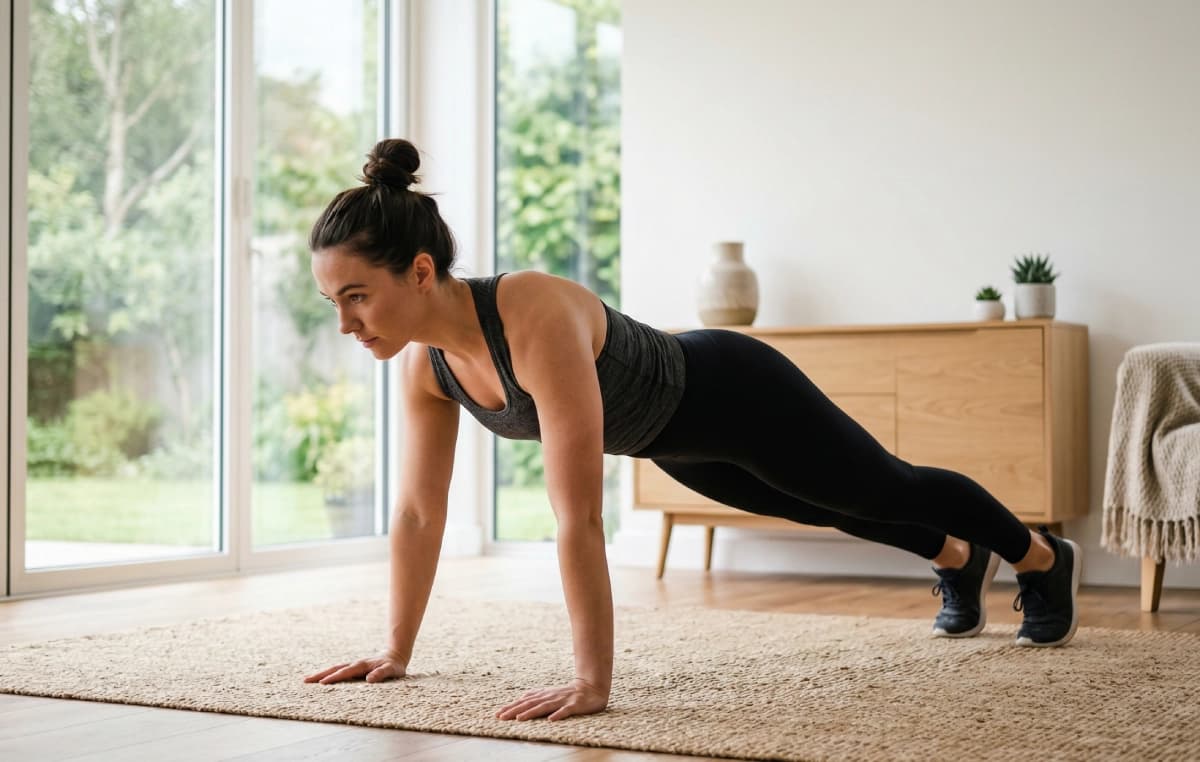
Calisthenics doesn't require a gym. It never did. Your bodyweight, a small amount of floor space, and a consistent schedule are all you need to build real strength, improve body composition, and move better than most people who train in a gym.
This program is built for absolute beginners — people who may not be able to do a single pull-up or push-up yet. Everything is scalable. The movements are the same ones elite calisthenics athletes use; we just adjust the difficulty to match where you are right now.
Why Calisthenics Works for Beginners
Most beginners start with isolation machines in a gym — and it's actually one of the least effective approaches. Calisthenics uses compound movements that train multiple muscle groups simultaneously, require real balance and coordination, and build what coaches call "relative strength" — strength relative to your own bodyweight. This transfers directly to athletics, daily life, and skill development.
The other advantage: the learning curve and strength curve align perfectly. As you learn the movement, your body also gets stronger in it. There's no waste.
Equipment (Optional but Useful)
Required: Nothing. Helpful:
- Pull-up bar ($20–40 doorframe bar) — opens up the entire pulling progression
- Resistance band — makes early pull-up training accessible
- Yoga mat — protects knees on hard floors
If you don't have a pull-up bar, the program includes table row substitutions.
The Program Structure
3 days per week (Mon/Wed/Fri or Tue/Thu/Sat — doesn't matter which days, just rest at least one day between sessions)
4 weeks with progressive overload built in
Each workout takes 30–45 minutes including warm-up.
Warm-Up (5–7 minutes, every session)
Do this before every workout. Don't skip it.
- Jumping jacks or march in place: 2 minutes
- Arm circles: 10 forward, 10 backward
- Leg swings: 10 forward/back each leg, 10 side-to-side each leg
- Deep squat hold: 30 seconds, chest up
- Hip circles: 10 each direction
- Cat-cow: 10 slow reps
The Exercises: Progressions for Every Level
Push-Up Progression (Chest, Shoulders, Triceps)
| Level | Exercise | Difficulty |
|---|---|---|
| 1 | Wall push-up | Very easy |
| 2 | Incline push-up (hands on chair/bench) | Easy |
| 3 | Kneeling push-up | Moderate |
| 4 | Full push-up | Standard |
| 5 | Slow push-up (3-second descent) | Harder |
| 6 | Archer push-up | Advanced |
Start where you can complete 3 × 8 reps with good form.
Squat Progression (Quads, Glutes, Hamstrings)
| Level | Exercise | Difficulty |
|---|---|---|
| 1 | Assisted squat (hold doorframe) | Very easy |
| 2 | Box squat (sit onto chair, stand up) | Easy |
| 3 | Bodyweight squat | Standard |
| 4 | Pause squat (3s hold at bottom) | Harder |
| 5 | Bulgarian split squat | Advanced |
| 6 | Pistol squat progression | Very advanced |
Row Progression (Back, Biceps)
No pull-up bar: use a sturdy table. With pull-up bar: use the bar at hip height or low.
| Level | Exercise | Difficulty |
|---|---|---|
| 1 | Table row — torso upright (body at 45°) | Easy |
| 2 | Table row — body more horizontal | Moderate |
| 3 | Full horizontal row (feet elevated on chair) | Harder |
| 4 | Bar negative pull-ups | Advanced |
| 5 | Full pull-up | Very advanced |
Hip Hinge Progression (Posterior Chain)
| Level | Exercise | Difficulty |
|---|---|---|
| 1 | Glute bridge (2 legs) | Easy |
| 2 | Glute bridge with hold (3 seconds) | Moderate |
| 3 | Single-leg glute bridge | Harder |
| 4 | Hip thrust (shoulders on sofa/bench) | Advanced |
| 5 | Nordic hamstring curl | Very advanced |
Core Progression
| Level | Exercise | Difficulty |
|---|---|---|
| 1 | Dead bug | Easy |
| 2 | Plank (forearm) | Moderate |
| 3 | Full plank | Harder |
| 4 | Plank with shoulder taps | Advanced |
| 5 | Hollow body hold | Very advanced |
The 4-Week Program
Week 1 — Learning the Movements
Goal: Form over reps. Identify your starting level for each movement.
Workout A and B alternate (3x/week)
Workout A:
- Push-up progression: 3 × 8
- Squat progression: 3 × 10
- Core (dead bug or plank): 3 × 20 sec or 3 × 8/side
- Rest 60–90 seconds between sets
Workout B:
- Row progression: 3 × 8
- Hip hinge (glute bridge): 3 × 12
- Core (plank variation): 3 × 20–30 sec
Week 1 schedule: Mon = A, Wed = B, Fri = A
Week 2 — Building Volume
Changes: Add one set per exercise (now 4 sets), or increase reps by 2
Workout A:
- Push-up: 4 × 8–10
- Squat: 4 × 10–12
- Core: 3 × 30 seconds
Workout B:
- Row: 4 × 8–10
- Hip hinge: 4 × 12–15
- Core: 3 × 30 seconds
Week 2 schedule: Mon = A, Wed = B, Fri = A
Week 3 — Progressive Overload
Changes: Increase difficulty by moving to the next progression level, OR add reps/hold time
Workout A:
- Push-up: 4 × 10 (or move to harder variation for 3 × 8)
- Squat: 4 × 12 (or introduce pause squat)
- Core: 4 × 30 seconds
Workout B:
- Row: 4 × 10 (or move to more horizontal variation)
- Single-leg glute bridge: 3 × 10 each side
- Core: 4 × 30 seconds
Week 4 — Test Week
Goal: Test your progression and establish new baselines
- On Day 1: Max push-up test (do as many as you can with good form)
- On Day 3: Max squat test
- On Day 5: Attempt the next progression level for each movement
Compare to Week 1. Typical Week 1 → Week 4 improvements:
- Push-ups: +4–8 reps or jump 2 progression levels
- Squats: +6–10 reps or able to do pause squats
- Rows: from upright table row to horizontal row or first pull-up attempts
Progression Rules
Move to the next level when: You can complete 3 sets of 12 with good form and feel fully controlled (no struggling on the last rep)
Stay at current level when: You can't complete the target reps, form breaks down, or you have any joint pain
Deload every 4 weeks: Do week 5 at 50% volume (half the sets) to allow full recovery before starting the next block
What You'll Gain in 4 Weeks
For a true beginner, 4 weeks of consistent 3×/week training produces:
- Measurable strength increase in all movement patterns
- Improved body composition (muscle gain / fat loss varies with nutrition)
- Better posture and body awareness
- Foundation for every advanced calisthenics skill
Common Beginner Mistakes
Training every day — more is not better. Muscles grow during rest, not during training. Three sessions per week beats seven mediocre ones.
Skipping progressions — if you can't do 3 × 8 full push-ups, doing 2 reps per set is not useful. Start at the level where you can complete the workout.
Ignoring the posterior chain — most people focus on push-ups and squats and skip rows and glute bridges. This creates imbalances that lead to injury. Our Calisthenics Injury Prevention & Rehabilitation course covers these imbalances and how to address them before they become problems.
Not tracking — write down your exercises, sets, and reps each session. Without tracking, you can't see progress and tend to repeat the same session rather than progressing.
The Next Step After This Program
After completing 4 weeks:
- Begin a structured pull-up program (see our 30-Day Pull-Up Program for Beginners)
- Add dips progression (parallel bars, chair dips)
- Start working toward pistol squat and push-up variations
The foundation you build in these first 4 weeks sets up everything that comes after. Invest in good form now and you'll avoid the joint problems that plague people who rush ahead.
🎓 Want to become a certified instructor?
Learn the science behind it with our FREE Calisthenics Instructor Certification: anatomy, kinesiology and program design in 15 lessons. Create a free account and earn your certificate!