

Streetlifting vs Powerlifting vs Calisthenics: Which Is Right for You?
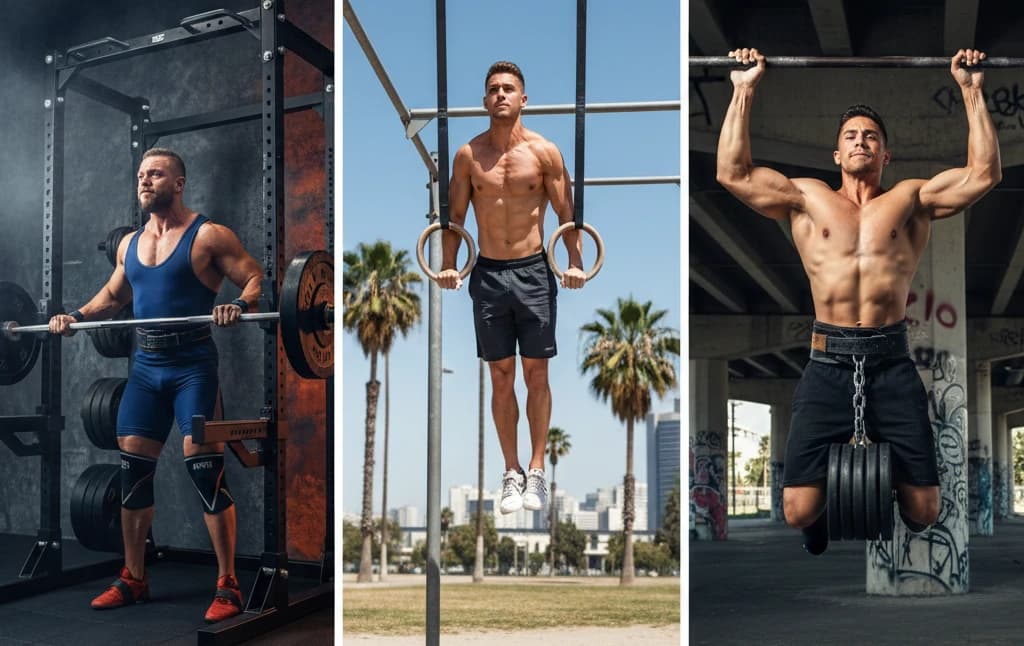
Streetlifting vs Powerlifting vs Calisthenics: Which Is Right for You?
The strength training world has never offered more options. Whether you're drawn to the raw power of powerlifting, the bodyweight mastery of calisthenics, or the hybrid intensity of streetlifting, choosing your discipline can shape your entire fitness journey. But which one is actually right for you?
This comprehensive guide breaks down all three disciplines to help you make an informed decision—or discover that combining them might be your best path forward.
What Is Each Discipline?
Before diving into comparisons, let's establish what each discipline actually involves.
Powerlifting: The Big Three
Powerlifting is a competitive strength sport centered on three lifts: the squat, bench press, and deadlift. Athletes get three attempts at each lift, and the goal is simple—move the maximum weight possible while meeting strict technical standards.
Key characteristics:
- Focus on absolute strength (total weight lifted)
- Highly standardized competition rules and weight classes
- Emphasis on technique optimization for maximum poundage
- Training revolves around the "big three" movements and their variations
Calisthenics: Mastering Your Bodyweight
Calisthenics uses bodyweight exercises to build strength, flexibility, and body control. From basic push-ups to advanced skills like the planche and front lever, calisthenics develops relative strength—how strong you are in relation to your body weight.
Key characteristics:
- No external weights required (though progressions add difficulty)
- Emphasis on movement skills and body control
- Builds strength, flexibility, and coordination simultaneously
- Progressive skill acquisition from basic to advanced movements
Streetlifting: The Best of Both Worlds
Streetlifting emerged from the street workout and weighted calisthenics community. It combines bodyweight fundamentals with added weight, focusing primarily on weighted pull-ups and weighted dips as competition lifts.
Key characteristics:
- Hybrid discipline blending calisthenics and strength training
- Competition lifts: weighted pull-up, weighted dip, and sometimes muscle-up
- Tests relative strength with external load
- Growing competitive scene with federations worldwide
Pros and Cons of Each Discipline
Powerlifting
Pros:
- Clear progression: Adding weight to the bar provides measurable, motivating progress
- Simple programming: The movements are straightforward to learn and program
- Lower body focus: Unmatched for building leg and hip strength
- Established sport: Extensive resources, coaching, and competition opportunities
- Hypertrophy potential: Heavy compounds drive significant muscle growth
Cons:
- Equipment dependent: Requires barbell, plates, rack, and bench
- Injury risk: Heavy axial loading can stress joints and spine
- Less functional transfer: Moving a barbell doesn't always translate to real-world movement
- Body weight can work against you: Heavier weight classes require more absolute strength
- Limited movement variety: Training focuses heavily on three patterns
Calisthenics
Pros:
- Minimal equipment: Train anywhere with just a pull-up bar
- Builds body awareness: Develops proprioception and coordination
- Skill satisfaction: Unlocking new movements provides unique motivation
- Joint-friendly progression: Bodyweight naturally limits overloading
- Functional strength: Direct transfer to real-world movement capabilities
- Aesthetic physique: Tends to build a lean, balanced muscular development
Cons:
- Slower strength gains: Progressive overload is less straightforward
- Limited lower body development: Difficult to match weighted squats for leg growth
- Steep learning curve: Advanced skills require months or years of practice
- Plateau potential: Adding difficulty becomes complex at advanced levels
- Body weight matters: Heavier athletes face significant disadvantages
Streetlifting
Pros:
- Best of both worlds: Combines bodyweight skill with progressive loading
- Measurable progress: Adding weight provides clear benchmarks
- Upper body focus: Excellent for developing pulling and pushing strength
- Growing sport: Emerging competitive scene with exciting energy
- Relative strength emphasis: Rewards athletic body composition
- Accessible entry point: Basic movements before adding weight
Cons:
- Less established: Fewer resources and standardized programming
- Limited lower body: Like calisthenics, leg development requires additional work
- Equipment needs: Requires dip belt and weight for progression
- Smaller competition scene: Fewer events than powerlifting
- Technique demands: Must master bodyweight form before loading
Equipment and Gym Requirements
Powerlifting Equipment
Essential:
- Barbell (20kg/45lb for men, 15kg/35lb for women)
- Weight plates (bumper or iron)
- Squat rack or power cage
- Flat bench
Recommended:
- Lifting belt
- Knee sleeves or wraps
- Wrist wraps
- Chalk
- Lifting shoes with elevated heel
Gym options: Powerlifting requires a commercial gym, home gym, or specialized powerlifting gym. Budget home setups start around $1,000-2,000 for quality equipment.
Calisthenics Equipment
Essential:
- Pull-up bar (doorway, wall-mounted, or outdoor)
Recommended:
- Parallel bars or dip station
- Gymnastics rings
- Resistance bands (for assistance and mobility)
- Parallettes
Gym options: Train at home, outdoor calisthenics parks (free), or any gym with basic equipment. A complete home setup can cost under $200.
Streetlifting Equipment
Essential:
- Pull-up bar
- Dip bars or dip station
- Dip belt for adding weight
- Weight plates
Recommended:
- Gymnastics rings
- Weight vest (alternative loading method)
- Chalk
Gym options: Any gym with a pull-up bar and dip station works. Home setup costs $300-500 including a dip belt and plates.
Competition Opportunities
Powerlifting Competitions
Powerlifting offers the most established competitive pathway:
- Major federations: IPF (International Powerlifting Federation), USAPL, IPL, WRPF, and many others
- Competition levels: Local, regional, national, and international meets
- Weight classes: Multiple divisions based on body weight and age
- Tested and untested: Both drug-tested and untested federations exist
- Frequency: Competitions available nearly every weekend in most regions
Calisthenics Competitions
Calisthenics competitions vary widely in format:
- Street workout battles: Athletes perform freestyle routines judged on difficulty, execution, and creativity
- Skill competitions: Events testing specific movements (most muscle-ups, longest hold, etc.)
- Major organizations: World Street Workout and Calisthenics Federation (WSWCF), Battle of the Bars
- Online competitions: Video submission-based events have grown significantly
- Frequency: Less frequent than powerlifting but growing rapidly
Streetlifting Competitions
Streetlifting is the newest competitive discipline:
- Growing federations: World Streetlifting Federation (WSF) and regional organizations
- Competition format: Maximum weight lifted in weighted pull-up and weighted dip
- Weight classes: Divided by body weight for fair relative strength comparison
- Emerging scene: Competitions becoming more common, especially in Europe and Russia
- Combined events: Often held alongside street workout competitions
Body Type Considerations
Your body structure influences which discipline might suit you best—though dedication trumps genetics in all cases.
Powerlifting Body Types
Advantages for:
- Shorter limbs (shorter range of motion on lifts)
- Wider frame and thicker torso
- Natural ability to carry more muscle mass
- Heavier body weights (super heavyweight classes)
Challenges for:
- Very tall athletes (longer range of motion)
- Those who struggle to add body mass
- Long-limbed individuals (especially for bench press)
Calisthenics Body Types
Advantages for:
- Lighter body weight (less mass to move)
- Longer limbs (better leverage for levers)
- Naturally lean physique
- Smaller frame with good strength-to-weight ratio
Challenges for:
- Heavier athletes (more weight to control)
- Those who carry muscle mass easily (added weight)
- Very short limbs (some leverage disadvantages)
Streetlifting Body Types
Advantages for:
- Moderate build with good strength-to-weight ratio
- Athletes who can build strength without excessive weight gain
- Those with good pulling and pushing mechanics
- Lean, muscular physique
Challenges for:
- Very heavy athletes (harder relative strength metrics)
- Those with poor shoulder mechanics
- Extremely light athletes (may lack absolute strength base)
Skill Requirements and Learning Curve
Powerlifting Skills
Beginner phase (0-6 months):
- Learning proper squat, bench, and deadlift technique
- Understanding basic programming principles
- Building foundational strength
Intermediate phase (6 months-2 years):
- Refining technique for competition standards
- Learning competition commands and rules
- Developing meet-day strategies
Advanced phase (2+ years):
- Technical mastery and individual optimization
- Peaking protocols for competition
- Managing training around competition schedule
Calisthenics Skills
Beginner phase (0-6 months):
- Building foundational strength (push-ups, rows, squats)
- First pull-up and dip achievements
- Learning progression principles
Intermediate phase (6 months-2 years):
- Muscle-up acquisition
- Handstand development
- L-sit and basic static holds
Advanced phase (2+ years):
- Front lever and back lever
- Planche progressions
- One-arm pull-up and advanced skills
- Freestyle and dynamic movements
Streetlifting Skills
Beginner phase (0-6 months):
- Solid bodyweight pull-ups and dips (10+ reps)
- Introduction to weighted variations
- Basic programming for progressive overload
Intermediate phase (6 months-2 years):
- Weighted pull-up approaching bodyweight added
- Weighted dip exceeding bodyweight added
- Competition technique refinement
Advanced phase (2+ years):
- Elite relative strength numbers
- Optimizing performance for weight class
- Competition strategy and peaking
Community and Culture
Powerlifting Culture
Powerlifting has a well-established community:
- Team atmosphere: Training crews and gym communities are common
- Supportive competition: Lifters typically cheer for each other regardless of rivalry
- Technical discussion: Deep analysis of form and programming
- Tradition: Rich history dating back decades
- Diverse demographics: All ages and backgrounds represented
Calisthenics Culture
Calisthenics embodies a distinct lifestyle:
- Street workout origins: Strong urban and park training roots
- Social media presence: Highly visual discipline with active online community
- Skill sharing: Culture of teaching and learning from others
- Accessibility focus: Emphasis on training with minimal resources
- Youth energy: Younger demographic with creative expression
Streetlifting Culture
Streetlifting bridges both worlds:
- Emerging identity: Developing its own distinct culture
- Hybrid community: Attracts both calisthenics and strength athletes
- Competition camaraderie: Growing competitive scene with tight-knit athletes
- Innovation: Athletes experimenting with training methods
- Online growth: Building community through social platforms
Which Should You Choose Based on Your Goals?
Choose Powerlifting If:
- Your primary goal is maximum absolute strength
- You want to compete in an established sport with clear standards
- Lower body strength is a priority
- You enjoy measurable, weight-on-the-bar progress
- You have access to proper barbell equipment
- You prefer structured, percentage-based programming
Choose Calisthenics If:
- You want to master impressive bodyweight skills
- Training anywhere with minimal equipment appeals to you
- Body control and movement quality are priorities
- You prefer a lean, functional physique
- Skill achievement motivates you more than numbers
- You enjoy creative, varied training approaches
Choose Streetlifting If:
- You want measurable strength progress with bodyweight foundations
- Upper body strength and relative strength appeal to you
- You like the idea of combining weights with calisthenics
- Competition in a growing sport interests you
- You want the best of both strength and skill worlds
- A lean, strong physique is your aesthetic goal
Can You Combine Them?
Absolutely—and many athletes find this the optimal approach.
Hybrid Training Strategies
Powerlifting + Calisthenics:
- Use powerlifting for lower body strength (squats, deadlifts)
- Apply calisthenics for upper body skill and relative strength
- Combine barbell pressing with weighted dips and push-up progressions
- Add calisthenics as accessory work for muscle balance
Streetlifting + Powerlifting:
- Use powerlifting programming principles for weighted calisthenics
- Add barbell work for comprehensive strength development
- Squat and deadlift for lower body, weighted pulls and dips for upper
- Periodize between strength phases and skill phases
Streetlifting + Calisthenics:
- Build bodyweight skill foundation before adding weight
- Use weighted work for strength, bodyweight for skills
- Progress toward advanced calisthenics while maintaining strength
- Compete in both street workout and streetlifting events
Sample Hybrid Weekly Split
| Day | Focus |
|---|---|
| Monday | Weighted Pull-ups + Deadlifts |
| Tuesday | Calisthenics Skills (Handstand, Levers) |
| Wednesday | Weighted Dips + Bench Press |
| Thursday | Active Recovery / Mobility |
| Friday | Squats + Pistol Squat Progressions |
| Saturday | Full Body Calisthenics or Street Workout |
| Sunday | Rest |
Final Verdict: There's No Wrong Choice
The best discipline is the one you'll actually do consistently. All three build impressive strength, create capable bodies, and offer fulfilling training experiences.
Start with your current resources: If you have a barbell, explore powerlifting. If you have a pull-up bar, start with calisthenics. If you have both, consider streetlifting.
Follow your motivation: Skill-based challenges appeal to some; adding weight to the bar motivates others. Neither is superior—both build real strength.
Stay open to evolution: Many athletes begin in one discipline and migrate to others. Your 2026 training might look completely different from your 2028 approach, and that's perfectly fine.
Consider combining: The artificial separation between disciplines often limits athletes. The strongest, most capable bodies usually result from intelligent combination of multiple training methods.
Whatever you choose, commit to consistent training, progressive challenge, and enjoying the process. That's the real secret to building strength that lasts.
Ready to Start Your Journey?
If calisthenics or weighted calisthenics appeals to you, the Calisthenics Association offers comprehensive courses and certifications to accelerate your progress. From foundational strength to advanced skill development, structured guidance helps you avoid common mistakes and reach your goals faster.
The strength training world is waiting—pick your path and start moving.
References
-
Schoenfeld, B. J., et al. (2017). Strength and Hypertrophy Adaptations Between Low- vs. High-Load Resistance Training. Journal of Strength and Conditioning Research.
-
Calatayud, J., et al. (2015). Muscle Activation During Push-Ups with Different Suspension Training Systems. Journal of Sports Science and Medicine.
-
World Street Workout and Calisthenics Federation. (2026). Official Competition Rules and Standards.
-
International Powerlifting Federation. (2026). Technical Rules Book.
-
Snarr, R. L., & Esco, M. R. (2014). Electromyographical Comparison of Plank Variations Performed With and Without Instability Devices. Journal of Strength and Conditioning Research.