

What Is Streetlifting? The Sport Combining Calisthenics and Strength
What Is Streetlifting? The Sport Combining Calisthenics and Strength
If you've mastered bodyweight pull-ups and dips and want to take your training to the next level, streetlifting might be the perfect challenge. This rapidly growing sport combines the technical precision of calisthenics with the measurable progression of weight training, creating a unique competitive discipline that's attracting athletes worldwide.
What Is Streetlifting?
Streetlifting is a competitive strength sport centered on two weighted calisthenics movements: the weighted pull-up and the weighted dip. Athletes compete to lift the maximum amount of added weight while performing these fundamental exercises with strict form.
Think of it as powerlifting's bodyweight cousin. Where powerlifters test their strength through squats, bench presses, and deadlifts, streetlifters demonstrate their relative strength through weighted variations of classic calisthenics exercises.
The sport emerged from the street workout and weighted calisthenics community, primarily in Eastern Europe and Russia, during the early 2010s. What started as informal competitions at outdoor calisthenics parks evolved into an organized sport with standardized rules, weight classes, and international federations.
The Two Main Competition Lifts
Weighted Pull-Up
The weighted pull-up is the signature lift of streetlifting. Athletes hang additional weight from a dip belt and perform a single pull-up from a dead hang to chin over the bar.
Competition standards typically require:
- Full arm extension at the bottom (dead hang position)
- Chin clearly over the bar at the top
- No kipping, swinging, or momentum
- Controlled movement without excessive body movement
- Pronated grip (palms facing away) in most federations
Current elite numbers:
- Men: 100+ kg (220+ lbs) added weight
- Women: 50+ kg (110+ lbs) added weight
The weighted pull-up tests pulling strength, grip endurance, and lat development—making it the ultimate measure of upper body pulling power relative to body weight.
Weighted Dip
The weighted dip complements the pull-up by testing pressing strength. Athletes add weight to a dip belt and perform a single dip between parallel bars.
Competition standards typically require:
- Upper arm parallel to the ground or below at the bottom
- Full elbow lockout at the top
- Controlled descent and ascent
- No excessive forward lean or swinging
- Shoulders must remain below the elbows at the bottom position
Current elite numbers:
- Men: 120+ kg (265+ lbs) added weight
- Women: 60+ kg (130+ lbs) added weight
The weighted dip challenges the chest, triceps, and anterior deltoids, providing a balanced test alongside the pull-up.
Optional Third Lift: Weighted Muscle-Up
Some competitions include a third lift—the weighted muscle-up. This combines a pull-up with a dip in one explosive movement, adding weight to this already demanding exercise.
The weighted muscle-up remains less common in competition due to its technical complexity, but it showcases the hybrid nature of streetlifting perfectly.
Competition Format and Rules
Weight Classes
Like powerlifting, streetlifting divides competitors into weight classes to ensure fair competition. Common divisions include:
Men's weight classes:
- Under 60 kg (132 lbs)
- 60–70 kg (132–154 lbs)
- 70–80 kg (154–176 lbs)
- 80–90 kg (176–198 lbs)
- 90–100 kg (198–220 lbs)
- Over 100 kg (220+ lbs)
Women's weight classes:
- Under 50 kg (110 lbs)
- 50–60 kg (110–132 lbs)
- 60–70 kg (132–154 lbs)
- Over 70 kg (154+ lbs)
Weight class divisions vary by federation, but the principle remains consistent: athletes compete against others of similar body weight.
Attempt Structure
Standard competition format gives each athlete three attempts at each lift:
- First attempt: Conservative opener to secure a score
- Second attempt: Moderate increase based on first attempt success
- Third attempt: Maximum effort for personal or competition records
Athletes must successfully complete at least one attempt to record a score. The highest successful lift counts toward their total.
Judging Criteria
Three judges typically evaluate each attempt, looking for:
- Full range of motion: Complete extension and contraction
- Controlled movement: No jerking, bouncing, or momentum
- Proper body position: Minimal swinging or kipping
- Clean execution: Smooth, deliberate technique
A lift receives a "good lift" or "no lift" ruling. Two out of three judges must approve for the lift to count.
Scoring
Final placement is determined by:
- Total weight: Combined best successful lifts (pull-up + dip)
- Relative strength coefficient: Some competitions use formulas like Wilks or Dots to compare across weight classes
- Body weight consideration: Lighter athletes who lift comparable weights rank higher in some scoring systems
Major Streetlifting Federations
World Street Workout and Calisthenics Federation (WSWCF)
The WSWCF is the largest international organization overseeing street workout and streetlifting competitions. Based in Latvia, they organize the annual World Championships and sanction events globally.
Key features:
- Standardized international rules
- Official world records
- Drug-tested and untested divisions
- Youth and masters categories
World Streetlifting Federation (WSF)
The WSF focuses specifically on streetlifting competition, separate from freestyle street workout events. They've been instrumental in standardizing rules and growing the competitive scene.
Regional Federations
Numerous regional and national federations exist:
- ISF (International Streetlifting Federation): Growing presence in Europe
- National federations: Russia, Ukraine, Belarus, and Baltic states have particularly active scenes
- Local organizations: Many countries have emerging local federations
The sport is still young enough that new organizations continue to form as participation grows.
Who Is Streetlifting For?
Calisthenics Athletes Seeking Competition
If you've been training weighted pull-ups and dips without a competitive outlet, streetlifting provides clear goals and measurable benchmarks. The sport transforms solo training into a shared pursuit with rankings, records, and events.
Strength Athletes Who Prefer Bodyweight Movements
Powerlifters and weightlifters who enjoy calisthenics find streetlifting offers the competitive structure they're used to with movements they find more engaging or joint-friendly.
Athletes Building Relative Strength
Streetlifting rewards athletes who maximize strength relative to body weight. If you prefer staying lean while getting stronger—rather than gaining mass for absolute strength—this sport aligns with your goals.
Those Seeking a New Challenge
Plateaued on bodyweight progressions? Adding weight provides infinite scalability. There's always more weight to add, more records to chase, and higher levels to reach.
Streetlifting vs. Powerlifting vs. Calisthenics
Understanding where streetlifting fits among strength disciplines helps clarify its unique appeal.
Compared to Powerlifting
| Aspect | Streetlifting | Powerlifting |
|---|---|---|
| Main lifts | Weighted pull-up, weighted dip | Squat, bench, deadlift |
| Primary focus | Upper body, relative strength | Full body, absolute strength |
| Equipment | Pull-up bar, dip bars, dip belt | Barbell, rack, bench |
| Body weight impact | Lighter athletes advantaged | Heavier classes lift more total |
| Lower body | Minimal in competition | Primary focus |
Compared to Pure Calisthenics
| Aspect | Streetlifting | Calisthenics |
|---|---|---|
| Progression | Add external weight | Leverage and skill progressions |
| Competition focus | Maximum weight lifted | Skills, freestyle, endurance |
| Measurability | Exact kg/lbs added | Subjective difficulty ratings |
| Skill requirement | Fundamental movements | Complex skills (planche, lever) |
| Training approach | Strength periodization | Skill acquisition focus |
The Unique Position
Streetlifting occupies a middle ground: more measurable than calisthenics skill competitions, more bodyweight-focused than powerlifting, and accessible to athletes from both backgrounds.
Basic Equipment Needed
Getting started with streetlifting requires minimal investment compared to many strength sports.
Essential Equipment
1. Pull-Up Bar A sturdy bar that can handle your body weight plus significant added load. Options include:
- Outdoor calisthenics park bars (free)
- Wall-mounted pull-up bars
- Power rack with pull-up attachment
- Doorway bars (check weight capacity)
2. Dip Bars or Station Parallel bars for dip training:
- Outdoor parallel bars at parks
- Standalone dip station
- Power rack dip attachment
- Gymnastics rings (for training, less common in competition)
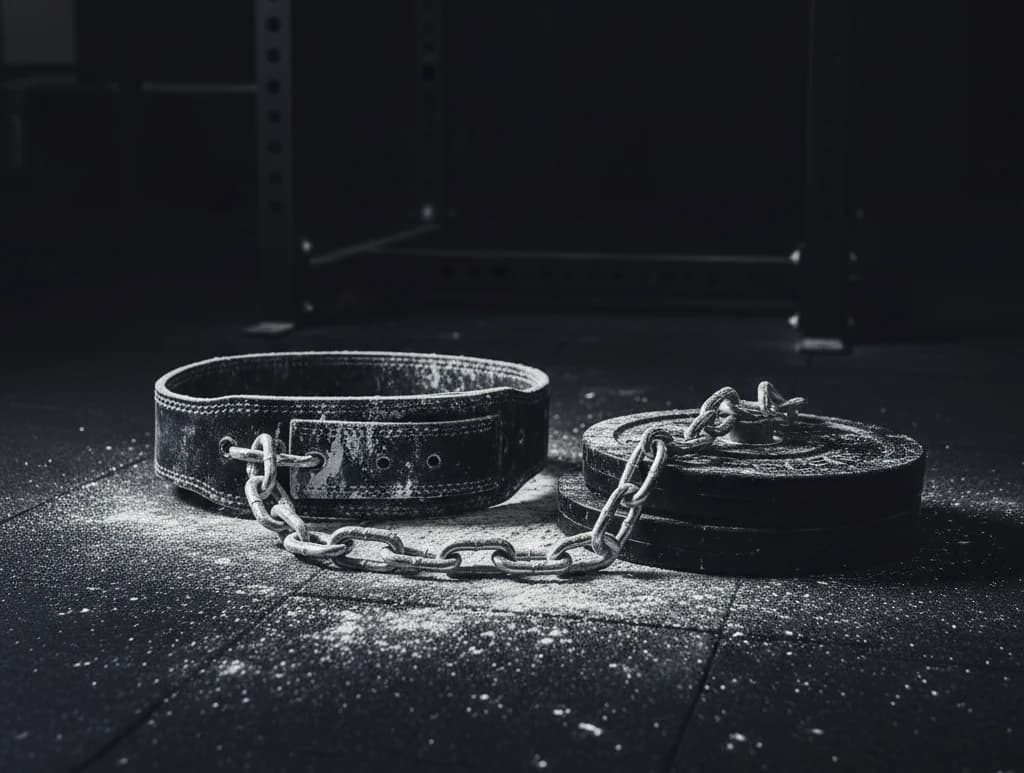
3. Dip Belt The critical piece of equipment for adding weight:
- Leather or nylon belt that wraps around waist
- Chain or strap to hang weight plates
- Quality belts handle 100+ kg loads
- Budget: $30–100 depending on quality
4. Weight Plates Standard weight plates to load on your dip belt:
- Olympic plates (2-inch hole) or standard (1-inch)
- Start with 10–25 kg collection
- Expand as you progress
Recommended Additions
Weight Vest Alternative loading method, especially useful for:
- Warm-up sets
- Higher rep training
- When belt loading is inconvenient
Chalk Improves grip for heavy weighted pull-ups:
- Liquid chalk for gym-friendly option
- Block chalk for maximum grip
Wrist Wraps Optional support for heavy weighted dips:
- Provides wrist stability under load
- Not permitted in all federations
Budget Breakdown
| Item | Budget Option | Quality Option |
|---|---|---|
| Pull-up bar | Park (free) | Wall-mount ($50–150) |
| Dip station | Park (free) | Standalone ($100–200) |
| Dip belt | Basic nylon ($30) | Premium leather ($80–100) |
| Plates | Used plates ($1/kg) | New plates ($2–3/kg) |
| Total | $30–50 | $300–500 |
Getting Started with Streetlifting
Prerequisite Strength
Before adding weight, establish these baselines:
- Pull-ups: 10+ strict reps with good form
- Dips: 15+ strict reps with full range of motion
- Grip strength: Comfortable dead hang for 30+ seconds
If you can't hit these numbers, focus on bodyweight progressions first.
Beginning to Add Weight
Week 1–4: Light Loading
- Start with 5–10 kg (10–20 lbs) added
- Focus on maintaining perfect form
- 3–5 reps per set, 3–4 sets
- Train each lift 2x per week
Week 5–8: Progressive Loading
- Add 2.5–5 kg every 1–2 weeks
- Reduce reps as weight increases
- Begin working singles and doubles
- Maintain form over ego
Beyond 8 Weeks: Structured Programming
- Follow periodized strength program
- Include light, medium, and heavy days
- Deload every 4–6 weeks
- Consider competition preparation cycles
Sample Beginner Program
Day 1: Pull Focus
- Weighted pull-ups: 4x5 @ 60% max
- Bodyweight pull-ups: 3x8
- Rows: 3x10
Day 2: Push Focus
- Weighted dips: 4x5 @ 60% max
- Bodyweight dips: 3x10
- Push-ups: 3x15
Day 3: Heavy Singles
- Weighted pull-up: Work to heavy single (90%+)
- Weighted dip: Work to heavy single (90%+)
- Accessory work: Grip, core
Repeat weekly, adding small weight increments when all sets are completed successfully.
Finding Competitions
Online Resources
- WSWCF website: Event calendar and registration
- Instagram: Follow @streetlifting, federation accounts, and top athletes
- Facebook groups: Regional streetlifting communities
- YouTube: Competition footage and athlete channels
Starting Local
Many cities have informal weighted calisthenics meetups before organized competitions:
- Outdoor calisthenics park communities
- CrossFit gyms with calisthenics focus
- Strength sport gyms with pull-up equipment
Your First Competition
For your first event:
- Choose a smaller, local competition
- Set conservative opening attempts
- Focus on completing lifts, not winning
- Learn the commands and procedures
- Connect with the community
The Future of Streetlifting
Streetlifting is experiencing rapid growth:
- Increasing international recognition: More countries hosting sanctioned events
- Growing social media presence: Athletes sharing training and competitions
- Equipment innovation: Better dip belts and competition equipment
- Standardization: Rules becoming more consistent across federations
- Youth participation: Younger athletes entering the sport
As calisthenics continues its mainstream popularity surge, streetlifting offers the competitive structure many athletes seek.
Conclusion
Streetlifting transforms weighted calisthenics from solitary training into organized sport. Whether you're a calisthenics athlete seeking competition, a strength athlete preferring bodyweight movements, or someone wanting clear, measurable progression in your pull-ups and dips, streetlifting provides the framework.
The equipment requirements are minimal, the community is welcoming, and the progression is infinite. You can always add more weight, always chase higher numbers, and always find athletes pushing the boundaries of what's possible.
Start by mastering bodyweight fundamentals, invest in a quality dip belt, and begin adding weight. In a few months, you might find yourself on a competition platform, testing your strength against others who share your passion for this unique sport.
The bar is waiting.
References
-
World Street Workout and Calisthenics Federation. (2026). Official Competition Rules and Standards.
-
Calatayud, J., et al. (2015). Muscle Activation During Push-Ups with Different Suspension Training Systems. Journal of Sports Science and Medicine.
-
Schoenfeld, B. J., et al. (2017). Strength and Hypertrophy Adaptations Between Low- vs. High-Load Resistance Training. Journal of Strength and Conditioning Research.
-
International Streetlifting Federation. (2026). Competition Rulebook.
-
Snarr, R. L., & Esco, M. R. (2014). Electromyographical Comparison of Plank Variations Performed With and Without Instability Devices. Journal of Strength and Conditioning Research.