

The Desk Worker's Calisthenics Routine (15 Minutes, No Equipment)
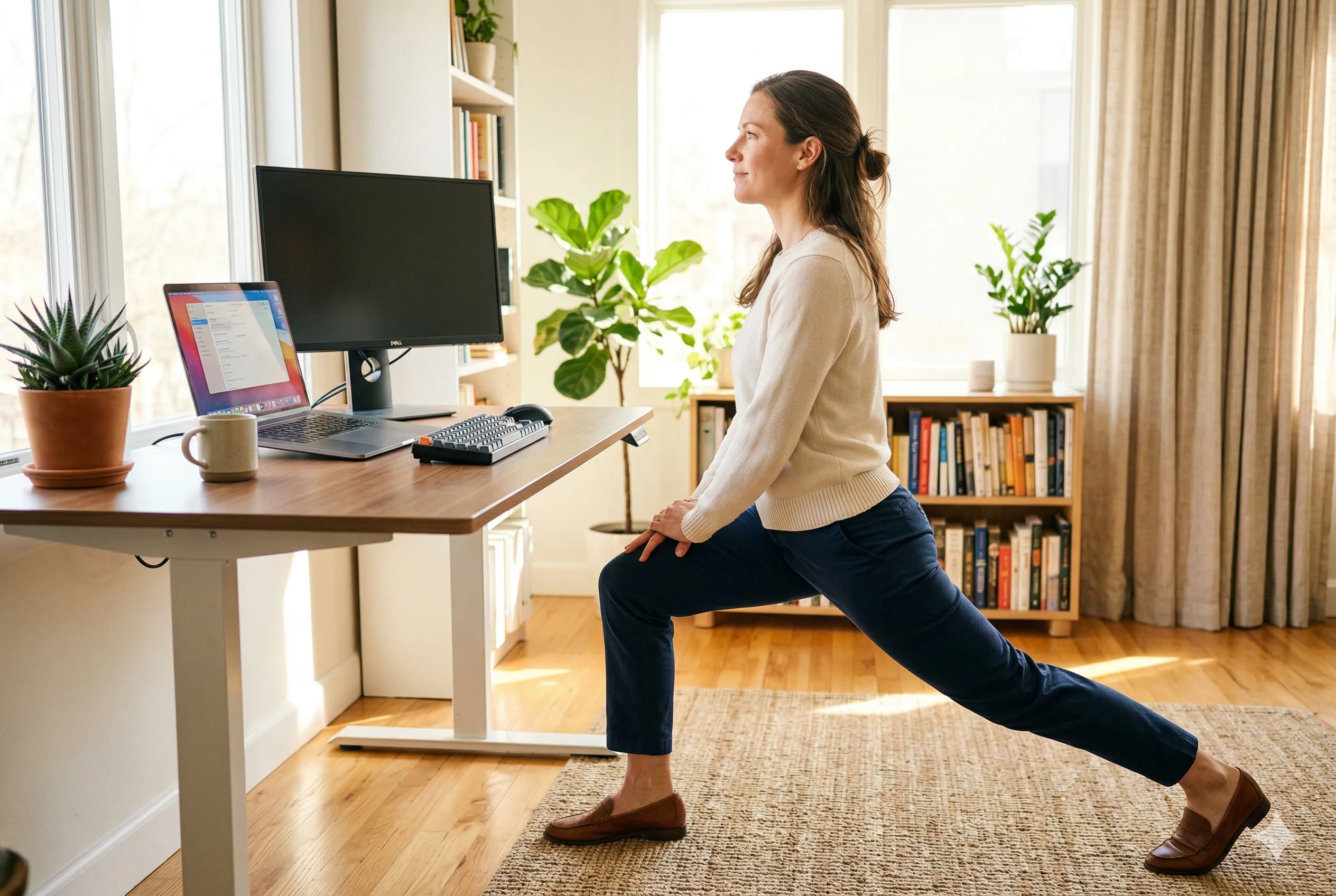
Sitting at a desk for 8 hours a day creates a predictable pattern of dysfunction: tight hip flexors, weak glutes, rounded shoulders, stiff thoracic spine, and a forward head. Over years, this compounds into chronic pain, poor posture, and reduced athletic performance.
The good news: 15 minutes of targeted movement each day can counteract most of this. This routine is built specifically for desk workers — it targets the exact muscles that weaken from sitting and the structures that stiffen from screen time.
What Happens to Your Body When You Sit All Day
Understanding the problem makes the solution obvious:
- Hip flexors (iliopsoas) shorten — from being held in a flexed position for hours
- Glutes inhibit — the brain stops using them efficiently (gluteal amnesia)
- Upper traps and neck extensors tighten — from holding your head forward
- Thoracic spine stiffens — loss of mid-back mobility affects shoulder and neck function
- Chest muscles shorten — from shoulders rolling forward around the keyboard
- Core switches off — passive sitting requires zero abdominal activation
This routine addresses all of these directly.
The 15-Minute Daily Routine
Do this in the morning before work, during your lunch break, or right after finishing for the day. The order matters — mobility first, then activation, then strength.
Block 1: Mobility (5 minutes)
1. Thoracic Extension over Chair (1 minute)
- Sit near the edge of your chair, clasp hands behind your head
- Extend backwards over the top of the chair back, opening your chest toward the ceiling
- Hold 3 seconds, return upright, repeat
- 10 slow reps
This directly reverses the flexion position your thoracic spine was in all day.
2. Hip Flexor Stretch — Kneeling Lunge (2 minutes)
- Kneel on one knee (pad it if on a hard floor)
- The other foot is forward at 90°
- Shift your hips forward until you feel a deep stretch in the front of the rear hip
- Raise the same-side arm overhead to increase the stretch
- 60 seconds each side
3. World's Greatest Stretch (2 minutes)
- Start in a lunge position with left foot forward
- Place left hand on the floor beside left foot
- Rotate right arm up toward the ceiling, following it with your eyes
- Hold 2 seconds, return, repeat
- 5 reps each side — takes about 2 minutes total
Block 2: Activation (5 minutes)
4. Glute Bridge (2 sets × 15 reps)
- Lie on your back, knees bent, feet flat
- Drive hips up by squeezing glutes — not by arching lower back
- Hold 2 seconds at top, squeeze hard
- Lower slowly
- Rest 30 seconds between sets
This re-activates the glutes after hours of inhibition. Critical.
5. Dead Bug (2 sets × 10 reps per side)
- Lie on back, arms pointing to ceiling, knees bent at 90°
- Slowly lower your right arm overhead while extending left leg
- Return to start, repeat opposite side
- Keep lower back pressed flat to the floor throughout
- Rest 30 seconds between sets
Dead bug re-connects the core and reestablishes the neural pattern of anti-extension stability.
6. Band Pull-Aparts or Doorframe Row (2 sets × 15 reps)
With a resistance band:
- Hold band at shoulder height with straight arms
- Pull apart until arms are extended to your sides, squeeze shoulder blades together
- Return with control
Without a band (doorframe row):
- Stand in a doorway, grab both sides of the frame at shoulder height
- Lean back, then pull yourself in, squeezing shoulder blades together
- 2 × 15 reps
This directly targets the chronically weak and lengthened rhomboids and lower trapezius.
Block 3: Strength (5 minutes)
7. Push-Ups — Specific Variation for Desk Workers
- Use a wider hand position than normal (slightly outside shoulder width)
- Elbows at 45°, not flared wide
- 3 × 10 reps with controlled 3-second descent
The slow eccentric builds chest and shoulder strength while teaching your brain to move through full shoulder range intentionally.
8. Bodyweight Squat with Pause
- Stand with feet shoulder-width, toes slightly out
- Squat to depth, hold 3 seconds at the bottom
- Stand and squeeze glutes hard at the top
- 2 × 12 reps
The pause at the bottom specifically mobilizes the hips and ankles while building leg strength — two problems desk workers always have.
9. Wall Angels (Shoulder Mobility)
- Stand with back flat against a wall, arms at 90° (goalpost position)
- Slowly slide arms up the wall overhead, keeping forearms in contact with the wall
- If your forearms leave the wall, your thoracic spine is too stiff — work within your range
- 2 × 10 reps
Desk Habits That Compound the Routine
The 15-minute routine is most effective when combined with better sitting habits:
- Stand every 45–60 minutes — set a timer. Even 2 minutes of standing resets muscle activation patterns
- Screen at eye level — most people have monitors too low, creating constant neck flexion
- Keyboard close to body — reaching forward internally rotates shoulders and rounds the upper back
- Feet flat on the floor — or use a footrest. Crossed legs create hip asymmetry over time
Adjustments for Different Fitness Levels
Complete beginner (no fitness background):
- Do just Block 1 + Block 2 for the first week
- Add Block 3 in week 2
Intermediate (regular exerciser but desk-based pain):
- Full routine as written
- Add weighted glute bridges (hold a dumbbell on your hips) once bodyweight feels easy
Advanced:
- Full routine as written
- Replace bodyweight squats with Bulgarian split squats
- Add a 60-second dead hang after the routine (shoulder decompression)
How Soon Will You Notice a Difference?
- After 1 week: Less stiffness in the morning, hips feel slightly less tight
- After 2–3 weeks: Posture improvement noticeable, reduced afternoon back ache
- After 4–6 weeks: Significant hip flexor flexibility gain, glutes firing properly in squats and stairs
Consistency beats intensity here. Doing this routine 5–6 days per week for 4 weeks will do more for desk-worker pain than occasional longer sessions. For deeper work on thoracic mobility specifically, see our guide to fixing upper back pain and thoracic stiffness. When you're ready to build full-body strength at home, our beginners' home calisthenics programme is the natural next step.
The One Exercise If You Only Have 5 Minutes
If 15 minutes isn't possible, do hip flexor stretches (60 seconds each side) + glute bridges (3 × 15) every single day. These two exercises address the most damaging effects of prolonged sitting with the smallest time investment.
🎓 Want to become a certified instructor?
Learn the science behind it with our FREE Calisthenics Instructor Certification: anatomy, kinesiology and program design in 15 lessons. Create a free account and earn your certificate!