

Hip Impingement in Squats: How to Train Pain-Free
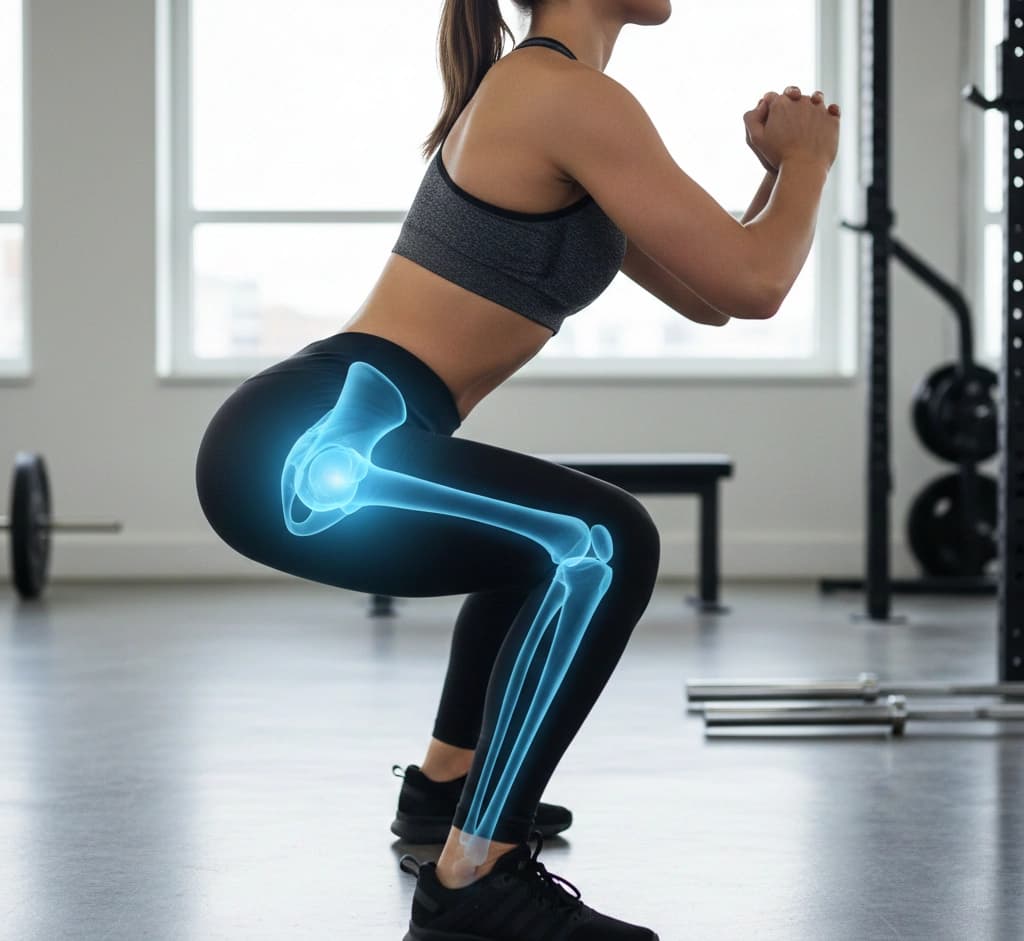
If you experience a pinching sensation in your hip during deep squats, feel like your hips are "stuck" at the bottom position, or notice sharp groin pain when you try to go below parallel, you may be dealing with hip impingement. This condition, formally known as femoroacetabular impingement (FAI), is one of the most common causes of hip pain in athletes who perform deep squatting movements, from bodyweight squats to pistol squats.
The frustrating reality is that hip impingement can make squatting feel impossible, but avoiding squats altogether is rarely the answer. With proper understanding, technique modifications, and targeted mobility work, most people with hip impingement can continue training while managing their symptoms effectively.
This guide covers everything you need to know about hip impingement and squatting: the anatomy behind it, how to identify if you have it, which squat modifications work best, and specific mobility exercises to improve your hip function.
What Is Hip Impingement (FAI)?
Femoroacetabular impingement (FAI) occurs when abnormal contact develops between the femoral head (ball) and the acetabulum (socket) of the hip joint. This abnormal contact typically happens at end ranges of motion, particularly during hip flexion, internal rotation, and adduction, which is exactly the combination of movements required during a deep squat.
The Anatomy of Hip Impingement
To understand hip impingement, you need to understand the hip joint's structure. The hip is a ball-and-socket joint where:
- The femoral head (the "ball") sits at the top of your thigh bone
- The acetabulum (the "socket") is part of your pelvis
- The labrum is a ring of cartilage that deepens the socket and provides stability
- Articular cartilage covers both surfaces to allow smooth movement
In a healthy hip, these structures allow for a wide range of motion without any bony contact. However, in FAI, extra bone growth or structural variations cause premature contact between these surfaces.
Types of Hip Impingement
There are three distinct types of FAI, and understanding which type you have can influence your training approach:
| Type | Description | Characteristics |
|---|---|---|
| Cam Impingement | Extra bone on the femoral head creates a bump that jams into the socket | More common in males, often athletic individuals. Causes cartilage damage on the acetabular side. |
| Pincer Impingement | Extra bone on the acetabulum creates over-coverage of the femoral head | More common in females. Causes labral crushing and may lead to labral tears. |
| Mixed/Combined | Both cam and pincer morphology present | Most common presentation (over 70% of cases). Features of both types. |
Important Note: Many people have FAI morphology (the structural variations) without ever experiencing symptoms. Research suggests that up to 30% of the general population may have some degree of FAI morphology. The presence of structural variations alone does not mean you cannot squat; it means you may need to adapt your technique.
How Hip Impingement Affects Squatting
Squatting requires simultaneous hip flexion, some degree of internal rotation, and often adduction depending on your stance width. This combination of movements is precisely where FAI causes the most problems.
The Biomechanics of Impingement During Squats
When you descend into a squat:
- Hip flexion increases as you lower your body
- The femoral head rotates within the socket
- At deep ranges, the femoral neck approaches the acetabular rim
- In FAI, abnormal bone morphology causes premature contact
This premature bony contact can:
- Pinch the labrum (causing sharp, catching pain)
- Compress articular cartilage (causing deep, aching pain)
- Trigger protective muscle guarding (causing stiffness)
- Limit your available range of motion
Why Some Squats Feel Worse Than Others
Not all squats affect hip impingement equally. Several factors determine how much impingement you experience:
Depth: Deeper squats require more hip flexion, increasing the likelihood of impingement. Many people with FAI feel fine until they go below parallel.
Stance Width: A narrow stance typically requires more hip flexion at the same depth. Wider stances may reduce impingement by allowing the femur to clear the pelvis more easily.
Toe Angle: External rotation of the feet (toes pointing outward) can help some people avoid impingement by changing the angle at which the femoral head meets the socket.
Pelvic Position: Excessive posterior pelvic tilt at the bottom of a squat (commonly called "butt wink") can increase impingement by reducing the available space between the femur and pelvis.
Signs and Symptoms of Hip Impingement
Recognizing hip impingement early can prevent worsening symptoms and potential joint damage. Here are the key signs to watch for.
Primary Symptoms
Groin Pain: The most common symptom is pain in the front of the hip or groin area. This pain is typically:
- Sharp or pinching during specific movements
- Located deep in the hip joint
- Worse with hip flexion activities (squatting, sitting, climbing stairs)
- Sometimes radiating to the inner thigh
Pain at End Ranges: You may feel fine through most of your squat but experience sudden pain at the deepest point of the movement.
Stiffness After Sitting: Prolonged sitting (which keeps the hip flexed) often worsens symptoms. You might feel stiff or painful when standing up after sitting for extended periods.
The FADIR Test (Self-Assessment)
A quick self-assessment that physical therapists and physicians use is the FADIR test (Flexion, ADduction, Internal Rotation):
- Lie on your back with legs straight
- Bring one knee toward your chest (flexion)
- Move your knee across your body toward the opposite shoulder (adduction)
- Rotate your foot away from your midline (internal rotation)
- Note any sharp pain, pinching, or significant limitation
Caution: A positive FADIR test (pain reproduction) suggests possible impingement but is not diagnostic on its own. Many conditions can cause similar symptoms. This test is a screening tool, not a diagnosis.
Secondary Signs to Watch For
- Clicking or catching in the hip during movement
- Reduced range of motion compared to your other hip
- Pain with exercise that improves with rest
- Difficulty with certain positions (crossing legs, getting in/out of cars)
- Lateral hip pain or trochanteric bursitis (which can develop as a compensation)
What Hip Impingement Pain Is NOT
Understanding what does not indicate FAI can help you identify other potential issues:
- Pain primarily on the outside of the hip (more likely bursitis or IT band issues)
- Pain that radiates below the knee (more likely nerve-related)
- Pain primarily in the buttock (more likely SI joint or piriformis)
- Constant pain that does not change with position or activity
Squat Modifications for Hip Impingement
You do not have to give up squatting if you have hip impingement. The key is modifying your technique to minimize impingement while still achieving an effective training stimulus.
Stance Adjustments
Widen Your Stance: A wider stance reduces the hip flexion required to reach a given depth. Experiment with a stance that is shoulder-width or wider.
Increase Toe-Out Angle: Pointing your toes outward (15-30 degrees) can help the femur clear the pelvis. Your knees should track over your toes.
Find Your Individual Stance: There is no universal "correct" squat stance. Your optimal position depends on your unique hip anatomy. Spend time experimenting to find what feels best.
Depth Modifications
Work Within Pain-Free Range: If deep squats cause impingement symptoms, limit your depth to where you can squat without pain. This might be parallel or slightly above.
Box Squats: Using a box at your comfortable depth provides a consistent endpoint and removes the uncertainty of "how low can I go today."
Pause Squats at Safe Depth: Pausing at your maximum comfortable depth increases time under tension without requiring additional range of motion.
Squat Variations That May Help
Some squat variations naturally reduce impingement stress:
Sumo Squats: The wide stance and externally rotated position often agree well with FAI hips.
Goblet Squats: The front-loaded position can help maintain a more upright torso, reducing hip flexion demands.
Belt Squats: If available, belt squats load the hips without requiring the same flexion angles as barbell back squats.
Single-Leg Variations with Support: Supported split squats or Bulgarian split squats can allow you to train one leg at a time with better control over hip position.
Variations to Approach with Caution
Some movements may be more problematic for those with FAI:
Pistol Squats: The extreme hip flexion combined with load can be highly provocative for impingement.
ATG (Ass-to-Grass) Squats: Maximum depth squats may not be appropriate if you have significant impingement.
Narrow-Stance Squats: These require more hip flexion and may increase symptoms.
Training Philosophy: Your goal should be to find the squat variations that allow you to train hard while respecting your hip's limitations. A slightly shallower squat performed consistently is far more valuable than a deep squat that causes pain and forces you to take time off.
Mobility Exercises for Hip Impingement
Targeted mobility work can help manage symptoms and potentially improve your available range of motion. However, the goal is not necessarily to "stretch away" structural bone changes. Rather, it is to optimize the mobility you have and address muscular restrictions that may be contributing to symptoms.
Hip Flexor Mobility
Tight hip flexors can contribute to anterior pelvic tilt and alter hip mechanics. Try these exercises:
Half-Kneeling Hip Flexor Stretch
- Kneel on one knee with the other foot forward
- Tuck your pelvis (flatten your lower back)
- Shift your weight forward slightly
- Hold for 30-60 seconds each side
- Perform 2-3 sets daily
Couch Stretch (Modified)
- Position one knee against a wall or couch
- Other foot forward in a lunge position
- Keep your pelvis tucked and core engaged
- Hold for 60-90 seconds each side
Posterior Hip Mobility
The muscles at the back of the hip (glutes, external rotators) often become tight in response to impingement.
90/90 Hip Stretch
- Sit with one leg in front (shin parallel to your body)
- Other leg to the side (shin perpendicular)
- Keep your chest tall
- Hold for 30-60 seconds, then switch sides
Pigeon Pose (Modified)
- From hands and knees, bring one knee forward
- Keep the shin at an angle comfortable for your hip
- Extend the back leg straight behind you
- Hold for 60-90 seconds each side
Note: If pigeon pose causes pinching in the front hip, this variation may not be appropriate for you. Prioritize positions that create a stretch without triggering impingement symptoms.
Hip Capsule Mobility
These exercises target the joint capsule itself, which can become restricted.
Quadruped Hip Circles
- Start on hands and knees
- Make slow circles with your knee, exploring your available range
- Perform 10 circles each direction, each side
- Focus on smooth, controlled movement
Supine Hip Flexion with Band Distraction
- Loop a resistance band around your upper thigh and anchor it behind you
- Lie on your back and bring your knee toward your chest
- The band provides a gentle distraction to the hip joint
- Hold for 30-60 seconds, oscillating gently
Daily Mobility Routine for Hip Impingement
A simple 10-minute daily routine can make a significant difference:
- Half-Kneeling Hip Flexor Stretch: 60 seconds each side
- 90/90 Hip Stretch: 60 seconds each side
- Quadruped Hip Circles: 10 each direction, each side
- Supine Hip Controlled Articular Rotations (CARs): 5 slow rotations each direction, each side
Consistency matters more than duration. Ten minutes daily will produce better results than an hour once a week.
Strengthening for Hip Stability
Mobility without stability is incomplete. These exercises help build strength around the hip:
Glute Bridge Variations
- Standard glute bridge: 3 sets of 15
- Single-leg glute bridge: 3 sets of 10 each side
- Banded glute bridge: 3 sets of 15
Side-Lying Hip Abduction
- Clamshells: 3 sets of 15 each side
- Side-lying leg raises: 3 sets of 12 each side
Copenhagen Plank Progressions
- Build adductor strength to support the hip
When to Seek Professional Help
While many people can manage mild hip impingement with exercise modifications and mobility work, some situations require professional evaluation.
Red Flags Requiring Medical Attention
Seek immediate medical care if you experience:
- Sudden inability to bear weight on the affected leg
- Severe pain that does not improve with rest
- Visible deformity around the hip
- Signs of infection (fever, warmth, redness)
- Numbness or weakness in your leg
When Conservative Management Is Not Enough
Consider seeing a healthcare professional if:
Symptoms persist beyond 4-6 weeks of consistent modification and mobility work
Pain is affecting daily activities beyond exercise (walking, sitting, sleeping)
You notice progressive worsening despite appropriate modifications
Mechanical symptoms are prominent (locking, catching, giving way)
You want diagnostic clarity about your specific anatomy and prognosis
Who to See
Sports Medicine Physician: Can provide diagnosis, imaging orders, and overall management plan
Physical Therapist: Specializes in movement assessment, exercise prescription, and manual therapy
Orthopedic Surgeon: For cases that may require surgical intervention (typically after conservative treatment has failed)
Imaging and Diagnosis
A proper FAI diagnosis typically involves:
X-rays: Can identify cam and pincer morphology, joint space, and other bony abnormalities
MRI/MRA: Provides detailed images of soft tissues including the labrum and cartilage
Clinical Examination: Physical tests help correlate imaging findings with actual symptoms
Important: Imaging findings alone do not determine treatment. Many people with FAI morphology on imaging are completely asymptomatic. Treatment decisions should be based on the combination of symptoms, clinical findings, and imaging.
What About Surgery?
Hip arthroscopy for FAI has become increasingly common, but surgery is not the first-line treatment. Current evidence suggests:
- Conservative treatment should be tried first (typically for 3-6 months minimum)
- Surgery is considered when conservative measures fail and symptoms significantly impact quality of life
- Surgical outcomes vary and depend on factors like the degree of cartilage damage
- Post-surgical rehabilitation is extensive (often 6+ months to return to full activity)
Training Around Hip Impingement: Practical Strategies
Here are practical strategies to keep training while managing FAI.
Warm-Up Protocol
Before squatting, spend 5-10 minutes on targeted preparation:
- Light cardio (2-3 minutes): Increase blood flow and tissue temperature
- Hip CARs: 5 slow rotations each direction, each side
- 90/90 Hip Switches: 10 total transitions
- Bodyweight Squats: 10-15 reps at comfortable depth
- Banded Hip Activation: Clamshells or lateral walks
Training Frequency Considerations
With FAI, more is not always better:
- Allow adequate recovery between squat sessions (48-72 hours minimum)
- Consider reducing squat frequency if symptoms flare
- Monitor your symptoms over time to identify patterns
Volume and Intensity Management
- Start conservative with modifications and gradually progress
- Use RPE (Rate of Perceived Exertion) rather than absolute loads initially
- Total volume may need to decrease if symptoms are elevated
- Prioritize quality of movement over quantity
Listen to Your Body
Develop awareness of the difference between:
- Productive discomfort: Muscle fatigue, mild stretch sensation
- Problematic pain: Sharp, pinching, or catching sensations
Stop the exercise if you experience the latter. Pushing through impingement symptoms typically makes things worse.
Common Mistakes to Avoid
Mistake 1: Ignoring the Pain
Hip impingement will not resolve by "pushing through." Continued impingement can damage the labrum and cartilage, leading to long-term consequences.
Mistake 2: Complete Avoidance of Squatting
The opposite extreme is equally problematic. Complete avoidance leads to weakness and deconditioning. Modified squatting within pain-free ranges is typically beneficial.
Mistake 3: Obsessing Over Depth
Squat depth is not a measure of fitness or worth. A parallel squat that you can perform pain-free is far more valuable than a deep squat that causes injury.
Mistake 4: Neglecting Strength Work
Focusing only on mobility while neglecting hip strength leaves the joint unsupported. Balance your program with strengthening exercises.
Mistake 5: Expecting Overnight Results
Hip impingement management is a long-term process. Consistency over weeks and months produces results, not short-term intensity.
Conclusion
Hip impingement does not have to end your squatting career. By understanding what FAI is and how it affects your movement, you can make informed decisions about your training. Key takeaways:
- Hip impingement (FAI) is a structural condition where abnormal bone contact occurs during hip movement
- Symptoms include groin pain, pinching at depth, and stiffness after sitting
- Squat modifications (stance, depth, variation selection) can allow pain-free training
- Mobility work targeting the hip flexors, posterior hip, and capsule helps optimize available range
- Strengthening the muscles around the hip provides stability and support
- Professional help is warranted when symptoms persist despite modifications
The goal is not to achieve the deepest squat possible but to squat in a way that supports your training goals while respecting your individual anatomy. With the right approach, most people with hip impingement can continue to train effectively and stay active for years to come.
For a deeper understanding of the musculoskeletal system and how to train around common limitations, check out our Anatomy Course.
References
-
Griffin DR, Dickenson EJ, O'Donnell J, et al. The Warwick Agreement on femoroacetabular impingement syndrome (FAI syndrome): an international consensus statement. British Journal of Sports Medicine. 2016;50(19):1169-1176.
-
Reiman MP, Thorborg K. Femoroacetabular impingement surgery: are we moving too fast and too far beyond the evidence? British Journal of Sports Medicine. 2015;49(12):782-784.
-
Kemp JL, King MG, Barton C, et al. Is exercise therapy for femoroacetabular impingement in or out of favour? British Journal of Sports Medicine. 2019;53(19):1208-1209.
-
Casartelli NC, Maffiuletti NA, Item-Glatthorn JF, et al. Hip muscle weakness in patients with symptomatic femoroacetabular impingement. Osteoarthritis and Cartilage. 2011;19(7):816-821.
-
Ganz R, Parvizi J, Beck M, et al. Femoroacetabular impingement: a cause for osteoarthritis of the hip. Clinical Orthopaedics and Related Research. 2003;417:112-120.
-
Wall PDH, Fernandez M, Griffin DR, Foster NE. Nonoperative treatment for femoroacetabular impingement: a systematic review of the literature. PM&R. 2013;5(5):418-426.