

How to Fix Knee Pain When Squatting: Complete Guide
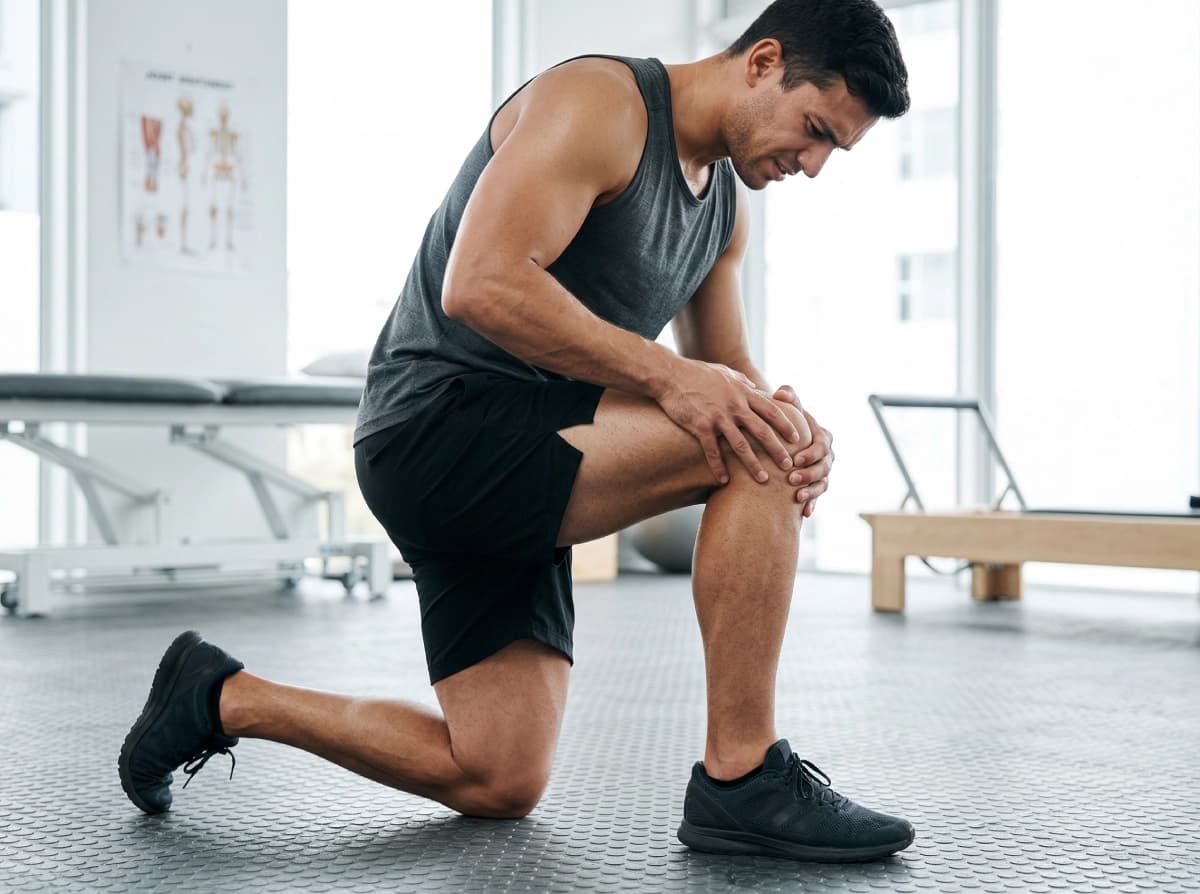
Knee pain during squats is one of the most common reasons calisthenics athletes plateau or quit. The knee gets blamed, but it's rarely the real problem. In most cases, the issue is upstream (hips, glutes) or downstream (ankles, feet) — the knee is just where the pain shows up.
This guide identifies the type of knee pain you're dealing with and gives you a targeted plan to fix it.
Identify Your Knee Pain First
Where and when your knee hurts tells us what's going on:
- Front of the knee (under the kneecap): Patellofemoral pain syndrome (PFPS) — the most common type
- Just below the kneecap: Patellar tendonitis — overuse of the quadriceps tendon
- Outside of the knee: IT band syndrome — friction on the lateral side
- Inside of the knee: Medial collateral ligament stress or pes anserine bursitis
- Pain only at the bottom of the squat: Usually ankle mobility restriction causing compensation
Patellofemoral Pain Syndrome (Runner's Knee)
PFPS feels like a dull ache or pressure around or behind the kneecap. It's worse going down stairs, after prolonged sitting, or during the descent phase of a squat.
Root cause: The patella isn't tracking correctly in its femoral groove. This happens when the VMO (inner quad) is weaker than the lateral quad, or when the hip external rotators are too weak to prevent the knee from caving inward (valgus collapse).
The fix:
VMO Strengthening: Terminal Knee Extensions
- Attach a resistance band behind your knee
- Stand with slight knee bend
- Push your knee back against the band until fully extended, squeeze hard
- 3 × 15 reps each leg, daily
Hip Abductor Strengthening: Side-Lying Hip Abduction
- Lie on your side, legs stacked
- Raise the top leg to ~45° with toes pointed slightly down (to isolate glute med)
- Lower with control
- 3 × 20 reps each side
Step-Down Exercise (Eccentric Quad Work)
- Stand on a step on one leg
- Slowly lower the opposite heel toward the floor over 3–4 seconds
- Don't let the standing knee cave inward
- 3 × 8 reps each leg
Patellar Tendonitis (Jumper's Knee)
Pain directly on the patellar tendon (between kneecap and shin bone), worse after high-rep squats, jump squats, or pistol squat training. The tendon is overloaded relative to its capacity.
The fix: Eccentric loading is the gold standard for tendon rehab.
Spanish Squat (Isometric Loading)
- Loop a band around a post at hip height and stand facing it, band behind your lower back
- Sit back into a squat, thighs parallel, and hold
- 3 × 45-second holds, daily
Research shows isometric loading provides immediate pain relief (up to 45%) while also stimulating tendon repair.
Decline Squat (Eccentric Patellar Tendon Loading)
- Stand on a 25–30° decline (use weight plates under your heels as a substitute)
- Perform a single-leg squat, slow 4-second descent
- Use support if needed
- 3 × 8–10 reps each leg, daily
IT Band Syndrome
Sharp or burning pain on the outside of the knee, typically appearing after a certain volume of squats or after run/jump workouts. The IT band itself is usually fine — the issue is the tissue underneath it (fat pad compression) or weakness in the hip abductors causing the knee to drop inward.
The fix:
Clamshells with Band
- Side-lying with knees bent at 90°, light resistance band above knees
- Rotate top knee upward like a clamshell, keep feet together
- 3 × 20 reps each side
Single-Leg Glute Bridge
- Lie on your back, one knee bent, other leg straight
- Drive hips up using the bent leg, hold 2 seconds at top
- 3 × 12 reps each side
Knee Valgus (Knees Caving Inward)
This isn't a diagnosis on its own but a mechanism that causes multiple knee conditions. If your knees collapse inward during squats, you're placing abnormal stress on the medial knee and patellar tracking.
Causes: Weak glutes and hip abductors, limited ankle mobility, or collapsed arches.
The fix:
Banded Squat with Knee Out Cue
- Place a resistance band just above your knees
- Squat with intentional focus on pushing knees out against the band
- This reinforces the correct motor pattern
- 3 × 10 reps
Ankle Mobility Work
Restricted ankle dorsiflexion forces knees to cave inward to compensate. Fix:
- Kneeling ankle stretch: kneel with one foot forward, drive knee past toes
- 2 minutes per side daily
Squat Form Modifications to Train Pain-Free
While you rehab, don't stop squatting — modify:
- Elevate heels (small plates or wedge): Compensates for ankle restriction, reduces knee stress
- Box squats: Sit back onto a box, reduces patellar tendon load
- Reduce depth temporarily: Squat to pain-free range only
- Split squat instead of squat: Lunge pattern reduces compressive load on the knee
The Hip-Knee Connection: Don't Skip This
The majority of knee pain cases in calisthenics come from insufficient glute and hip strength. The glutes control hip internal rotation — when they're weak, every squat rep creates medial knee stress.
Add these to your weekly training regardless of current symptoms:
- Hip thrusts or glute bridges: 3 × 15 twice per week
- Bulgarian split squats: 3 × 8 per side weekly
- Lateral band walks: 2 × 20 steps each direction, pre-workout
Recovery Timeline
- Mild PFPS: 3–6 weeks of consistent rehab
- Patellar tendonitis: 6–12 weeks with proper eccentric loading
- IT band syndrome: 4–8 weeks with hip strengthening and activity modification
- Chronic cases: Up to 6 months — tendons heal slowly but fully with proper loading
When to Seek Help
See a physiotherapist or sports medicine doctor if:
- Pain is above 5/10 during daily activities
- You have swelling inside the joint (not just around it)
- Your knee locks or gives way
- Pain doesn't improve after 6 weeks of consistent rehab
The Bottom Line
Knee pain during squats is almost never a knee problem. It's a movement quality problem — usually weak hips, restricted ankles, or poor quad-to-hamstring balance. Fix the mechanics, load the tendons correctly, and you'll be squatting pain-free within weeks.
Ankle restriction is one of the most common causes of knee valgus in squats — our guide to fixing ankle stiffness for pistol squats and deep squats addresses this directly. For those progressing toward the pistol squat, our Pistol Squat Mastery course will take you through the full progression safely.