

Uneven Hips: How to Fix Lateral Pelvic Tilt with Exercises and Stretches

Do you notice that one hip sits higher than the other when you stand? Does your belt or waistband appear crooked even when you're standing straight? You may have lateral pelvic tilt—a common but often overlooked postural dysfunction that can lead to back pain, hip discomfort, and movement compensations throughout the body.
Unlike anterior pelvic tilt (forward tilting) or posterior pelvic tilt (backward tilting), lateral pelvic tilt involves a side-to-side imbalance where one side of the pelvis is elevated relative to the other. The good news is that this condition is highly correctable with targeted exercises, stretches, and postural awareness.
What Is Lateral Pelvic Tilt?
Lateral pelvic tilt occurs when the pelvis shifts out of its neutral horizontal position, causing one hip to sit higher than the other. This creates an asymmetrical foundation that affects the entire kinetic chain—from your feet to your neck.
Understanding the Anatomy
The pelvis serves as the body's central hub, connecting the spine to the lower extremities. When viewed from the front, a healthy pelvis should be relatively level, with both iliac crests (the bony prominences you feel at your hip bones) at the same height.
In lateral pelvic tilt:
- High side (elevated hip): The hip appears higher, and the muscles on this side are typically shortened/tight
- Low side (dropped hip): The hip appears lower, and the muscles on this side are typically lengthened/weak
- Spinal compensation: The spine often curves (functional scoliosis) to compensate for the pelvic asymmetry
Key Muscles Involved
Understanding which muscles are affected helps you target your corrective work effectively:
On the HIGH side (tight/overactive):
- Quadratus lumborum (QL) - Primary hip hiker
- Tensor fasciae latae (TFL)
- Adductors
- Obliques (external and internal)
On the LOW side (weak/lengthened):
- Gluteus medius and minimus - Hip stabilizers
- Quadratus lumborum
- Obliques
- Hip abductors
Want to understand the anatomy in depth? Our free Anatomy Course covers the muscles of the lower extremity and pelvic musculature in detail—essential knowledge for understanding and correcting postural dysfunctions.
Common Causes of Lateral Pelvic Tilt
Lateral pelvic tilt rarely develops overnight. It's typically the result of long-term habits, muscle imbalances, or structural factors.
1. Habitual Standing Patterns
Standing habitually on one leg or consistently shifting weight to one side creates muscular imbalances. The hip-hiking muscles on one side become chronically shortened while the opposite side weakens.
Common culprits:
- Standing with weight on one leg while waiting in lines
- Leaning on one hip at standing desks
- Carrying a child always on the same hip
2. Sitting Habits
Sitting with one leg crossed over the other, sitting on a wallet, or consistently leaning to one side creates asymmetrical tension patterns in the pelvis and lower back.
3. Repetitive Unilateral Activities
Sports and activities that emphasize one side can create muscular imbalances:
- Golf and tennis (rotational sports)
- Soccer (dominant kicking leg)
- Carrying heavy bags always on one shoulder
4. Leg Length Discrepancy
A true structural leg length difference (anatomical) or functional leg length difference (caused by muscle imbalances) can cause the pelvis to tilt to compensate.
5. Previous Injuries
Past injuries to the hip, knee, ankle, or lower back can lead to compensatory movement patterns that persist long after the injury heals.
6. Weak Hip Stabilizers
Gluteus medius weakness is one of the most common contributors. When the glute medius can't adequately stabilize the pelvis during single-leg activities (walking, stair climbing), the pelvis drops on the opposite side—this is known as Trendelenburg sign.
7. Scoliosis
Structural scoliosis (spinal curvature) often accompanies lateral pelvic tilt, though it's important to distinguish between structural scoliosis and functional scoliosis caused by pelvic imbalance.
How to Identify Lateral Pelvic Tilt
Self-assessment can help you identify if you have lateral pelvic tilt and which side is affected.
Visual Assessment Tests
1. Mirror Test (Standing)
- Stand in front of a full-length mirror wearing minimal clothing
- Place your hands on your hip bones (iliac crests)
- Look at whether your hands are level or if one is higher
- Also observe: Are your shoulders level? Does your head tilt?
Interpretation:
- If your right hand is higher, you have a RIGHT lateral pelvic tilt (right hip elevated)
- If your left hand is higher, you have a LEFT lateral pelvic tilt (left hip elevated)
2. Photograph Assessment
- Have someone take a photo of you from behind while standing naturally
- Draw a horizontal line across your hip bones
- Draw another line across your shoulders
- Observe any tilting or asymmetry
3. Pant/Belt Line Test
- Stand naturally and observe your waistband or belt
- If it slopes down on one side, that hip is lower
- Check if your pants hem is uneven (one side drags on the floor)
Functional Tests
4. Single-Leg Stance Test (Trendelenburg Test)
- Stand on one leg, lifting the opposite knee to hip height
- Have someone observe your pelvis from behind
- Hold for 30 seconds
Positive sign (indicates weakness): If the pelvis drops on the lifted leg side, the stance leg's gluteus medius is weak.
5. Lying Assessment
- Lie flat on your back on a firm surface
- Have someone stand at your feet and compare the position of your ankle bones (medial malleoli)
- If one leg appears longer, the pelvis on that side may be tilted up
When to See a Professional
While self-assessment is helpful, consult a physical therapist, chiropractor, or orthopedic specialist if you experience:
- Chronic lower back pain on one side
- Hip or knee pain that doesn't improve with general exercise
- Significant visible asymmetry
- Numbness or radiating pain down one leg
- History of hip or spinal surgery
- Pain that worsens despite corrective exercises
A professional can distinguish between functional (muscular) and structural (skeletal) causes.
Corrective Exercises for Lateral Pelvic Tilt
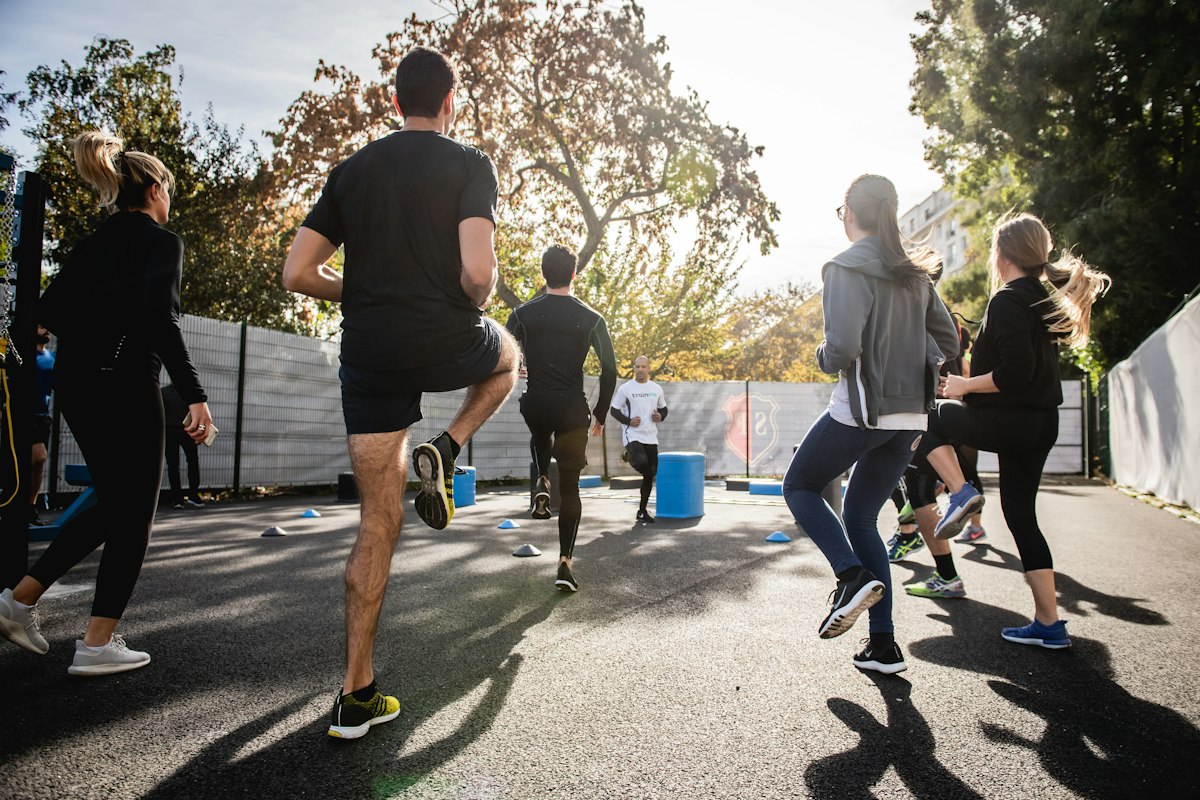
The correction strategy addresses both sides: stretch/release the tight side and strengthen the weak side. The exercises below are organized by their target.
Step 1: Release the Elevated (High) Hip Side
The high hip side typically has a tight quadratus lumborum and hip muscles that need releasing.
1. Quadratus Lumborum (QL) Stretch
Target: QL on the elevated hip side
- Stand with feet hip-width apart
- Raise the arm on the high hip side overhead
- Side bend away from the high hip (toward the low side)
- Reach over and slightly forward to intensify
- Hold 30-45 seconds, perform 3 sets
Alternative (lying down):
- Lie on your side with the high hip facing up
- Extend the top arm overhead and let the leg drop behind
- Feel the stretch along the side of your lower back
2. TFL/IT Band Release (Foam Rolling)
Target: Tensor fasciae latae and IT band on elevated side
- Lie on your side on a foam roller, positioned at the outside of your hip
- Support yourself with your forearm and opposite foot
- Roll slowly from hip to just above the knee
- Pause on tender spots for 20-30 seconds
- Perform 2-3 minutes on the tight side
3. Adductor Stretch (High Side)
Target: Inner thigh muscles on elevated side
- Stand with feet wide apart in a side lunge position
- Shift weight toward the low hip side, bending that knee
- Keep the high hip leg straight to feel stretch in inner thigh
- Hold 30-45 seconds, perform 3 sets
4. Standing Side Stretch
Target: Entire lateral chain on elevated side
- Stand with feet together
- Cross the high hip side leg behind the other
- Raise the same-side arm overhead
- Lean away from the high hip until you feel a stretch from hip to armpit
- Hold 30-45 seconds, perform 3 sets
Step 2: Strengthen the Low (Dropped) Hip Side
The low hip side has weak hip abductors that need strengthening, particularly the gluteus medius.
5. Side-Lying Hip Abduction
Target: Gluteus medius on the low hip side
- Lie on your high hip side (so the weak leg is on top)
- Keep your body in a straight line, hips stacked
- Lift the top leg toward the ceiling, keeping it straight
- Don't rotate the leg—keep toes pointing forward
- Lower slowly with control
- Perform 3 sets of 15-20 reps
Key cue: Lead with the heel, not the toes, to better engage the glutes.
6. Clamshells (with Band)
Target: External rotators and gluteus medius
- Lie on your high hip side with knees bent at 45 degrees
- Keep feet together
- Open the top knee like a clamshell while keeping feet touching
- Don't let your pelvis roll backward
- Perform 3 sets of 15-20 reps
Progression: Add a resistance band just above the knees.
7. Single-Leg Glute Bridge (Low Side Focus)
Target: Glute maximus and medius on weak side
- Lie on your back, knees bent, feet flat
- Lift the strong leg off the ground (high hip side leg)
- Drive through the weak side heel to lift hips
- Keep pelvis level—don't let it drop on one side
- Perform 3 sets of 10-12 reps per side (prioritize weak side)
8. Lateral Band Walks (Monster Walks)
Target: Hip abductors bilaterally with emphasis on weak side
- Place a resistance band around your ankles or just above knees
- Assume a quarter squat position
- Step sideways, leading with the weak hip side
- Keep tension on the band throughout
- Perform 3 sets of 15-20 steps each direction
Focus: When stepping with the weak side leg, consciously drive through the hip.
9. Single-Leg Romanian Deadlift
Target: Posterior chain and hip stability on weak side
- Stand on the weak hip side leg
- Hinge forward at the hip while extending the other leg behind
- Keep the standing leg slightly bent
- Lower until torso is parallel to floor
- Return to standing by driving through the hip
- Perform 3 sets of 8-10 reps per side (prioritize weak side)
Cue: Think about keeping your hips square to the ground throughout.
Step 3: Core and Pelvic Stability Exercises
These exercises address both sides and help restore balanced pelvic control.
10. Side Plank (Weak Side Emphasis)
Target: Obliques, QL, and hip stabilizers
- Start in a side plank on your elbow, weak hip side down
- Stack your feet or stagger them for stability
- Lift hips to create a straight line from head to feet
- Hold 20-30 seconds, perform 3 sets
Progression: Add hip dips (lower and lift hips) for dynamic strengthening.
11. Dead Bug with Pelvic Control
Target: Deep core stabilizers
- Lie on your back, arms toward ceiling, legs in tabletop
- Press your lower back flat into the floor
- Slowly extend opposite arm and leg while maintaining flat back
- Focus on keeping the pelvis completely stable
- Perform 3 sets of 10 reps per side
12. Pallof Press (Anti-Rotation)
Target: Core stability against rotational forces
- Attach a band to a sturdy anchor at chest height
- Stand sideways to the anchor, holding the band at chest
- Press the band straight out from your chest
- Resist the rotation—keep hips and shoulders square
- Perform 3 sets of 10-12 reps each side
13. Hip Hike Exercise
Target: Controlled pelvic movement and QL strengthening
- Stand on a step or platform with one foot hanging off
- Drop the hanging hip down (pelvic drop)
- Use the hip abductors to hike the hip back up to level
- Perform 3 sets of 12-15 reps each side
Important: Perform this on the weak side to strengthen the hip hikers.
Sample Correction Program
Daily Routine (15 minutes)
Stretch/Release (High Hip Side) - 5 minutes:
- QL stretch: 2×45 sec
- TFL foam roll: 2 minutes
- Standing side stretch: 2×45 sec
Strengthen (Low Hip Side) - 8 minutes:
- Side-lying hip abduction: 3×15
- Clamshells with band: 3×15
- Single-leg glute bridge: 3×10
Core Stability - 2 minutes:
- Side plank (weak side): 3×20 sec
3x Per Week Addition (25 minutes)
Add these exercises to the daily routine:
Strength Work:
- Single-leg RDL: 3×10 per side (prioritize weak side)
- Lateral band walks: 3×15 each direction
- Hip hike exercise: 3×12 per side
Core/Stability:
- Dead bug: 3×10 per side
- Pallof press: 3×10 per side
- Plank with alternating hip drops: 3×8 per side
Addressing Both Sides: The Importance of Balance
While the focus is on stretching the tight side and strengthening the weak side, it's important to maintain some work on both sides to prevent overcorrection.
Guidelines:
- Stretching: 70% on tight side, 30% on opposite side
- Strengthening: 70% on weak side, 30% on opposite side
- Core work: Equal on both sides
As your pelvis approaches neutral, gradually shift to more balanced bilateral training.
Lifestyle Modifications for Hip Alignment
Corrective exercises work, but daily habits can reinforce or undermine your progress.
Standing Habits
- Distribute weight evenly on both feet
- Avoid standing on one leg habitually
- Set reminders to check your posture throughout the day
- Use a mirror to self-correct when possible
Sitting Habits
- Sit on both sit bones equally
- Avoid crossing legs (especially always the same way)
- Remove wallets from back pockets when sitting
- Use a level seat (avoid cushions that create tilt)
- Take standing breaks every 30 minutes
Sleeping Position
- Avoid sleeping on one side exclusively
- Place a pillow between knees when side sleeping
- Consider a small pillow under the low hip side when back sleeping
Exercise Modifications
- Audit your training for unilateral bias
- Add single-leg work that addresses imbalances
- Check your form in squats and deadlifts for asymmetrical weight shifting
Timeline and Expectations
Correcting lateral pelvic tilt requires patience and consistency. Here's what to expect:
Weeks 1-2:
- Increased awareness of the imbalance
- Initial muscle soreness as weak muscles activate
- Slight improvement in flexibility on tight side
Weeks 3-6:
- Noticeable improvement in hip levelness
- Reduced discomfort in lower back (if present)
- Stronger mind-muscle connection with hip stabilizers
Weeks 6-12:
- Significant postural improvement
- Automatic correction becoming more natural
- Improved single-leg stability and balance
3-6 months:
- Near-complete correction for most functional cases
- New movement patterns become default
- Reduced risk of related injuries
Critical note: Structural leg length differences or skeletal abnormalities may limit how much correction is possible. A professional assessment can clarify expectations.
Common Mistakes to Avoid
-
Only stretching the tight side - Strengthening the weak side is equally important
-
Aggressive stretching without strengthening - Creates instability without control
-
Ignoring daily habits - Exercises won't overcome 16 hours of poor posture
-
Training both sides equally when imbalanced - Initially, prioritize the weak side
-
Expecting immediate results - Postural changes take weeks to months
-
Overcorrecting - Don't create the opposite imbalance
-
Skipping core stability work - The pelvis needs core control to maintain position
-
Not addressing the root cause - If you don't change the habit that caused the tilt, it will return
When Exercises Aren't Enough
If consistent effort over 8-12 weeks shows minimal improvement, consider:
- Professional assessment - Rule out structural issues
- Manual therapy - PT, chiropractic adjustment, or massage
- Gait analysis - Running or walking patterns may need correction
- Footwear evaluation - Shoe lifts or orthotics for true leg length differences
- Imaging - X-rays to assess skeletal structure if needed
Connection to Overall Posture
Lateral pelvic tilt rarely exists in isolation. It often accompanies or contributes to:
- Functional scoliosis - Spine curves to compensate for tilted pelvis
- Uneven shoulders - Upper body compensates for lower body asymmetry
- Knee valgus (knock knees) - Often on the low hip side
- Foot pronation - Flat foot on one side as compensation
Addressing the pelvic tilt often improves these related issues, but a comprehensive approach may be needed.
Build your foundation in movement science. Our Kinesiology Course teaches the principles of human movement, while the Anatomy Course covers the musculoskeletal structures involved in postural dysfunction.
Conclusion
Lateral pelvic tilt—uneven hips—is a common postural dysfunction that responds well to targeted intervention. The key is identifying which side is elevated and which is dropped, then applying the appropriate combination of stretching, strengthening, and postural correction.
Remember the three-pronged approach:
- Release the tight muscles on the elevated hip side (QL, TFL, adductors)
- Strengthen the weak muscles on the dropped hip side (gluteus medius, hip abductors)
- Modify daily habits that reinforce the imbalance
Consistency is essential. Daily practice of corrective exercises, combined with awareness of your standing, sitting, and sleeping habits, will gradually restore pelvic symmetry. Most functional cases see significant improvement within 6-12 weeks of dedicated effort.
Your pelvis is the foundation of your posture. When it's level, everything above and below functions better. Take the time to correct the imbalance, and you'll move with greater efficiency, less pain, and improved performance in all your activities.
Ready to understand your body's movement patterns? Enroll in our free Anatomy Course and learn the foundations of musculoskeletal health, biomechanics, and injury prevention that make corrective exercise effective.
References
- Kendall, F. P., et al. Muscles: Testing and Function with Posture and Pain. 5th ed. Lippincott Williams & Wilkins, 2005.
- Neumann, D. A. Kinesiology of the Musculoskeletal System: Foundations for Rehabilitation. 3rd ed. Mosby, 2016.
- Sahrmann, S. A. Diagnosis and Treatment of Movement Impairment Syndromes. Mosby, 2002.
- McGill, S. M. Low Back Disorders: Evidence-Based Prevention and Rehabilitation. 3rd ed. Human Kinetics, 2015.
- Reiman, M. P., et al. "Hip abductor muscle strength in patients with low back pain: a systematic review." Journal of Back and Musculoskeletal Rehabilitation 25.2 (2012): 123-132.
- Cooper, N. A., et al. "Prevalence of gluteus medius weakness in people with chronic low back pain compared to healthy controls." European Spine Journal 25.4 (2016): 1258-1265.
🎓 Want to become a certified instructor?
Learn the science behind it with our FREE Calisthenics Instructor Certification: anatomy, kinesiology and program design in 15 lessons. Create a free account and earn your certificate!