

Flat Back Posture: Causes, Symptoms & Corrective Exercises for Lumbar Lordosis Loss
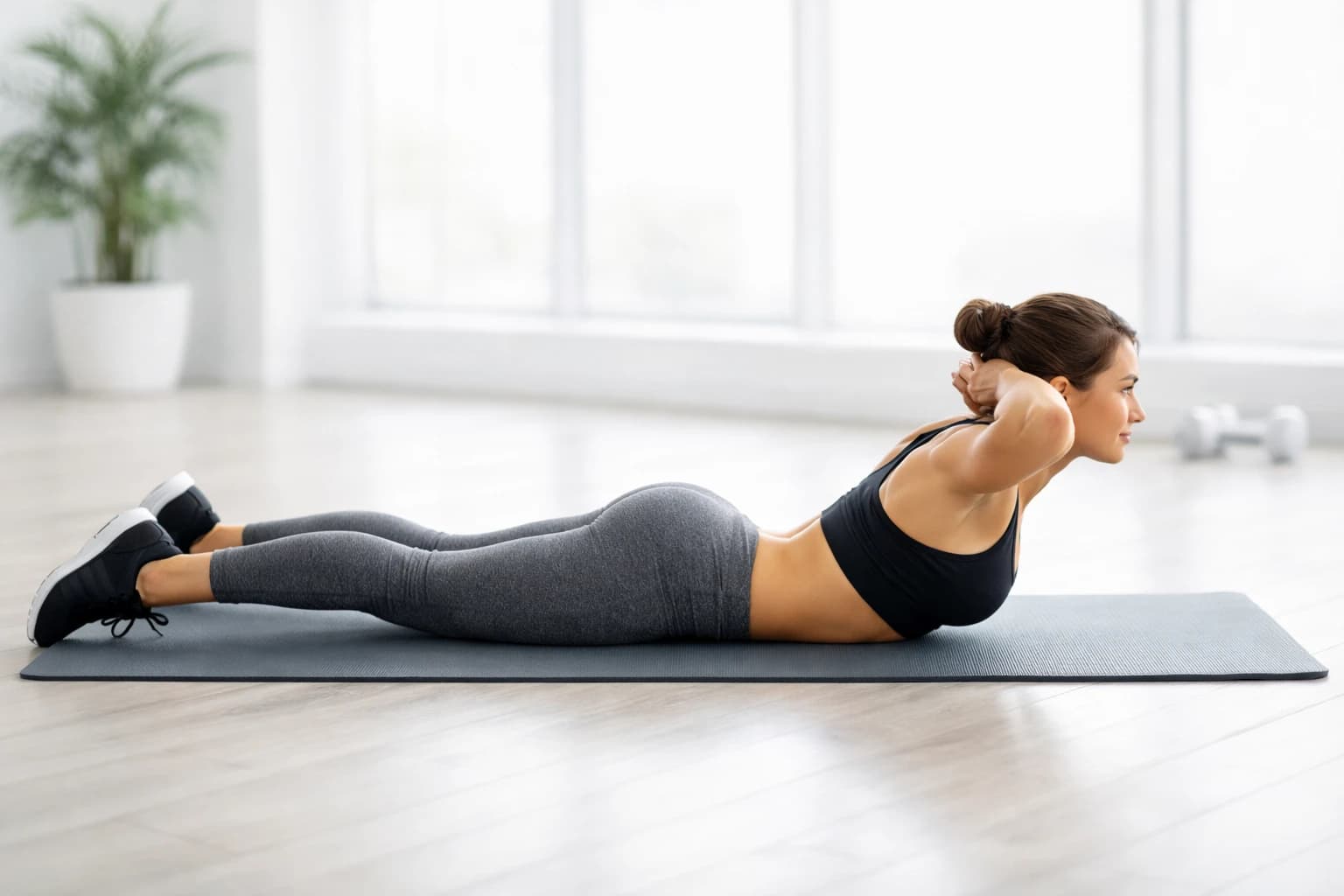
Flat back posture—also known as flat back syndrome or loss of lumbar lordosis—is a postural dysfunction where the natural inward curve of the lower back becomes flattened or even reversed. If you find yourself standing with a "tucked" pelvis, difficulty maintaining an arch in your lower back, or chronic stiffness when trying to stand upright, you may have flat back posture.
Unlike the more commonly discussed anterior pelvic tilt (where the pelvis tips forward), flat back posture involves the opposite: a posterior pelvic tilt that eliminates the healthy lordotic curve your spine needs for shock absorption and efficient movement.
Understanding Flat Back Posture: Anatomy and Mechanics
What Is Flat Back Posture?
Your spine has three natural curves: cervical lordosis (neck curves inward), thoracic kyphosis (upper back curves outward), and lumbar lordosis (lower back curves inward). These curves work together like a spring system to absorb impact, distribute load, and maintain balance.
Flat back posture occurs when the lumbar lordosis is reduced or absent, creating a spine that appears unnaturally straight from the side. This causes:
- Posterior pelvic tilt: The pelvis rotates backward, tucking the tailbone under
- Tight (short) muscles: Hamstrings, glutes, abdominals (particularly rectus abdominis)
- Weak (lengthened) muscles: Hip flexors (iliopsoas), lumbar erector spinae, quadriceps
- Loss of spinal shock absorption: Increased stress on vertebrae and discs
- Forward head posture: Compensatory shift to maintain balance
How Flat Back Differs from Other Postural Issues
Understanding where flat back fits among postural dysfunctions helps guide your correction approach:
| Condition | Pelvic Position | Lumbar Curve | Key Tight Muscles |
|---|---|---|---|
| Flat Back | Posterior tilt | Decreased/absent | Hamstrings, glutes, abs |
| Anterior Pelvic Tilt | Anterior tilt | Increased (hyperlordosis) | Hip flexors, lumbar extensors |
| Swayback | Posterior tilt with hip shift | Variable | Hamstrings, upper abs |
| Kyphosis-Lordosis | Anterior tilt | Increased | Hip flexors, lower back |
While anterior pelvic tilt involves excessive arching, flat back is essentially the opposite problem—too little curve. Both create issues, but they require different correction strategies.
Want to understand spinal biomechanics in depth? Our free Anatomy Course covers spinal structure and function, helping you understand why these postural dysfunctions occur and how to address them systematically.
Causes of Flat Back Posture
Primary Causes
1. Prolonged Sitting with Posterior Pelvic Tilt
Sitting slouched with your pelvis tucked under (common on soft couches or bucket seats) trains your body to maintain posterior pelvic tilt. Over years, the muscles adapt: hamstrings shorten, hip flexors weaken, and the spine loses its natural curve.
2. Over-Emphasis on "Tucking" Cues
Well-intentioned but misapplied fitness advice—"tuck your tailbone," "flatten your back," "engage your core"—can lead to chronic posterior tilt when taken too far. Many people overcorrect from anterior tilt into flat back territory.
3. Hamstring Dominance
Athletes and individuals who heavily train hamstrings without balancing hip flexor work can develop posterior pelvic tilt. Tight hamstrings pull the pelvis backward and down.
4. Weak Hip Flexors
The iliopsoas helps maintain lumbar lordosis. When weakened from disuse (sitting all day) or improper training, it cannot counterbalance hamstring and glute tension.
5. Spinal Conditions and Surgery
- Degenerative disc disease: Loss of disc height reduces lordosis
- Lumbar fusion surgery: Especially when fused in a flat position
- Ankylosing spondylitis: Progressive fusion of vertebrae
- Compression fractures: Can alter spinal alignment
6. Aging-Related Changes
Natural disc degeneration and muscle weakness with age can contribute to flattening of the lumbar curve, particularly in sedentary individuals.
7. Overcorrection from Anterior Pelvic Tilt
Many people who work on "fixing" anterior pelvic tilt swing too far in the opposite direction, chronically holding their pelvis in posterior tilt.
Contributing Factors
- Core training imbalances: Heavy focus on rectus abdominis (crunches, sit-ups) without hip flexor work
- Glute-dominant training: Excessive emphasis on glute activation without hip flexor balance
- Prolonged standing with locked knees: Pushes pelvis into posterior tilt
- Psychological factors: Depression and low confidence often manifest as collapsed, flat back posture
- Footwear: Flat shoes with no heel drop may contribute in some individuals
Symptoms and Signs of Flat Back Posture
Physical Symptoms
- Difficulty standing upright: Feeling like you're leaning forward even when trying to stand straight
- Lower back stiffness: Reduced mobility in lumbar extension
- Chronic lower back fatigue: Muscles working overtime to maintain posture
- Hip and thigh discomfort: Tight hamstrings and weak hip flexors create tension
- Upper back and neck compensation: Forward head posture to maintain balance
- Difficulty with lumbar extension exercises: Back bends, cobras feel restricted
Functional Issues
- Trouble maintaining arch during squats and deadlifts: Spine rounds under load
- Reduced athletic performance: Compromised power transfer through the spine
- Balance difficulties: Less efficient shock absorption
- Fatigue when standing for long periods: Muscles compensating for structural inefficiency
- Difficulty looking up without strain: Cervical compensation patterns
Visual Indicators
- Pelvis appears tucked under when viewed from the side
- Minimal or no visible curve in the lower back
- Belt line tilts slightly upward at the front
- Buttocks appear flat or "tucked"
- Head positioned forward of shoulders
Assessment: Do You Have Flat Back Posture?
Self-Assessment Tests
1. Wall Test
- Stand with your back against a wall, heels 4-6 inches from the wall
- Your head, shoulder blades, and buttocks should touch the wall
- Slide your hand behind your lower back
- Normal: Can fit a flat hand with slight space
- Flat back: Little to no space—lower back touches or nearly touches wall
2. Side-View Mirror Test
- Stand naturally in front of a mirror, viewing yourself from the side
- Observe your pelvic position and lower back curve
- Normal: Visible inward curve at lower back, belt line approximately horizontal
- Flat back: Minimal curve, pelvis tucked, belt line tilts up at front
3. Prone Extension Test
- Lie face down on the floor
- Place hands under shoulders and press up into a cobra/extension position
- Normal: Can achieve comfortable lumbar extension
- Flat back: Extension feels blocked, uncomfortable, or minimal range available
4. Thomas Test (Modified)
- Lie on your back at the edge of a table or firm bed
- Pull one knee to your chest, let the other leg hang off the edge
- Normal: Thigh drops to horizontal or below
- Flat back indicator: Thigh stays high (tight hip flexors/weak hip flexors)
Professional Assessment
Consult a physical therapist, chiropractor, or orthopedic specialist if you experience:
- Persistent pain that doesn't improve with corrective exercises
- Radiating pain into buttocks or legs
- History of spinal surgery or significant back injury
- Numbness or tingling in lower extremities
- Symptoms that worsen with standing or walking
The Fix: Corrective Exercise Protocol for Flat Back Posture
The correction approach differs from anterior pelvic tilt: here we need to lengthen the posterior chain (hamstrings, glutes) and strengthen the anterior hip muscles (hip flexors) and lumbar extensors.
Phase 1: Release and Lengthen Tight Muscles
1. Hamstring Stretches
Standing Hamstring Stretch
- Place one heel on an elevated surface (chair, step)
- Keep both legs straight, hinge forward at hips
- Maintain neutral spine—don't round your back to reach further
- Hold 45-60 seconds per side, 2-3 times daily
Supine Hamstring Stretch
- Lie on your back, one leg extended on floor
- Lift other leg toward ceiling, use strap or towel around foot
- Keep knee straight, pull gently until stretch is felt
- Hold 60 seconds per side
Key point: Stretch hamstrings without rounding the lower back—this reinforces neutral spine awareness.
2. Glute and Piriformis Stretches
Figure-4 Stretch
- Lie on back, cross one ankle over opposite knee
- Pull the uncrossed leg toward chest
- Feel stretch in the glute of the crossed leg
- Hold 45-60 seconds per side
Pigeon Pose
- From hands and knees, bring one knee forward
- Lower hips toward floor, extend back leg
- Keep hips square, fold forward over front leg
- Hold 60-90 seconds per side
3. Abdominal/Rectus Release
Prone Extension (Cobra)
- Lie face down, hands under shoulders
- Press up, lifting chest while keeping hips on floor
- Focus on creating lumbar extension
- Hold 15-20 seconds, repeat 5-10 times
Foam Roll Upper Abs/Thoracic
- Position foam roller under mid-back
- Support head with hands, slowly extend over roller
- Move roller to different positions along thoracic spine
- Spend 2-3 minutes daily
Phase 2: Strengthen Weak Muscles
4. Hip Flexor Strengthening
Standing Hip Flexor March
- Stand tall, hands on wall or holding support
- Lift one knee as high as possible while maintaining upright posture
- Hold 2-3 seconds at top
- Lower with control
- Perform 3 sets of 15 reps per leg
Seated Hip Flexor Lifts
- Sit on edge of chair with upright posture
- Lift one knee toward ceiling, keeping foot off floor
- Hold 5 seconds, lower with control
- Perform 3 sets of 12 reps per leg
Hanging Knee Raises (with lordosis focus)
- Hang from pull-up bar
- Raise knees toward chest, then actively lower past neutral, creating slight arch
- Focus on the eccentric (lowering) phase to strengthen hip flexors through full range
- Perform 3 sets of 8-10 reps
5. Lumbar Extensor Strengthening
Bird Dogs (Extension Focus)
- Start on hands and knees, neutral spine
- Extend opposite arm and leg, focus on lifting the back leg high
- Create a slight arch in lower back at top of movement
- Hold 3-5 seconds
- Perform 3 sets of 10 per side
Superman/Back Extensions
- Lie face down, arms extended overhead
- Simultaneously lift arms, chest, and legs off floor
- Focus on creating lumbar extension—squeeze lower back muscles
- Hold 3-5 seconds at top
- Perform 3 sets of 10-12 reps
Reverse Hypers (if equipment available)
- Lie face down on bench, hips at edge
- Lift legs behind you, squeezing glutes and lower back at top
- Focus on extending the lumbar spine
- Perform 3 sets of 12-15 reps
6. Quadriceps Strengthening
Terminal Knee Extensions (TKEs)
- Loop resistance band around fixed point at knee height
- Stand facing anchor, band behind knee
- Slightly bend knee, then straighten against band resistance
- Perform 3 sets of 15 per leg
Split Squats (Upright Torso)
- Step into lunge position, back knee on pad
- Keep torso completely vertical throughout movement
- Lower down, drive through front foot to return
- Focus on maintaining natural lumbar curve
- Perform 3 sets of 10-12 per leg
Phase 3: Mobility and Movement Retraining
7. Lumbar Extension Mobility
Cat-Cow (Extension Emphasis)
- Start on hands and knees
- Alternate between arching back (cow—drop belly, look up) and rounding (cat)
- Spend more time in cow position, actively creating lumbar lordosis
- Perform 15-20 cycles, 2-3 times daily
Prone Press-Ups (McKenzie)
- Lie face down, hands under shoulders
- Press up repeatedly, letting hips stay on floor
- Each rep should increase range of extension slightly
- Perform 10-15 reps, multiple times daily
Lumbar Rolls
- Lie on back, knees bent, feet flat
- Roll knees side to side, allowing natural spinal rotation
- Keep shoulders flat on floor
- Perform 10-15 per side, slowly and controlled
8. Pelvic Mobility Work
Pelvic Tilts (Anterior Focus)
- Lie on back, knees bent, feet flat
- Alternate between flattening back (posterior tilt) and arching (anterior tilt)
- Spend more time in anterior tilt, actively creating space under lower back
- Perform 20-30 tilts, 2-3 times daily
Standing Pelvic Tilts
- Stand with back against wall
- Practice tilting pelvis forward (creating arch) and backward (flattening)
- Work on finding and maintaining neutral with slight lordosis
- Hold anterior tilt position for 5-10 seconds, repeat 10 times
Phase 4: Postural Awareness and Integration
9. Standing Posture Retraining
Key cues for flat back correction:
- "Create space under your lower back": Consciously maintain slight arch
- "Untuck your tailbone": Allow pelvis to tilt slightly forward
- "Soft knees": Avoid locking knees, which promotes posterior tilt
- "Chest up, not out": Lift sternum without overextending
Practice positions:
- Stand with back against wall, actively create small space for your hand in lower back
- Hold this position for 30 seconds, repeat throughout the day
- Eventually maintain this naturally without the wall reference
10. Sitting Posture Modifications
- Sit on sit bones, not tailbone
- Use a lumbar roll or small pillow behind lower back
- Avoid bucket seats and soft couches that promote posterior tilt
- Maintain slight forward pelvic tilt when sitting
- Stand and move every 30 minutes
Sample Weekly Protocol
Daily (10-15 minutes):
- Hamstring stretches: 2 minutes
- Prone press-ups (McKenzie): 2 sets of 10
- Standing hip flexor marches: 2×12 per leg
- Pelvic tilts (anterior focus): 20 reps
- Cat-cow with extension emphasis: 15 cycles
3-4x Per Week (25-30 minutes):
- Foam rolling hamstrings and glutes: 3-4 minutes
- Full stretching routine: hamstrings, glutes, piriformis: 8-10 minutes
- Strengthening circuit:
- Superman holds: 3×10
- Bird dogs (extension focus): 3×10 per side
- Hip flexor marches: 3×15 per leg
- Split squats: 3×10 per leg
- Seated hip flexor lifts: 3×12 per leg
Throughout the Day:
- Posture checks with wall test
- Standing pelvic tilts during breaks
- Conscious "untuck" cues
- Avoid prolonged sitting with pelvis tucked
Timeline: What to Expect
Based on consistency and severity:
- 1-2 weeks: Improved awareness, reduced stiffness, better movement in lumbar extension
- 4-6 weeks: Noticeable changes in standing posture, stronger hip flexors
- 8-12 weeks: Significant improvement in lumbar curve, reduced compensation patterns
- 3-6 months: Full correction for most cases, natural lordosis becomes default
Key success factor: Daily practice of mobility and postural awareness beats occasional intense sessions.
Common Mistakes to Avoid
- Overcorrecting into anterior pelvic tilt: Aim for neutral, not excessive arch
- Only stretching without strengthening: Hip flexor and lumbar extensor strength is essential
- Continuing to sit "tucked": Postural habits must change alongside exercises
- Ignoring hip flexor activation: Many people have forgotten how to engage iliopsoas
- Rushing through mobility work: Slow, controlled movements create lasting change
- Locking knees when standing: Promotes posterior tilt
- Aggressive stretching of an already lengthened lower back: Don't stretch what's already long
- Expecting overnight results: Postural adaptation takes weeks to months
Connection to Other Postural Issues
Flat back posture rarely exists in isolation. Common associated dysfunctions include:
- Forward head posture: Compensatory pattern to maintain balance
- Rounded shoulders: Often accompanies flat back
- Upper back kyphosis: May increase as compensation
- Lower crossed syndrome: Related muscle imbalance pattern
Address these simultaneously for comprehensive postural correction.
When to Seek Professional Help
Consider consulting a physical therapist, chiropractor, or spine specialist if:
- Corrective exercises don't improve symptoms after 8-12 weeks of consistent effort
- You have a history of spinal surgery, especially lumbar fusion
- Pain radiates into buttocks, legs, or causes numbness/tingling
- Symptoms significantly worsen with standing or walking
- You suspect underlying conditions like degenerative disc disease or ankylosing spondylitis
- Manual assessment and personalized programming is needed
Conclusion
Flat back posture—the loss of natural lumbar lordosis—is a correctable postural dysfunction that responds well to targeted mobility work, strengthening of the hip flexors and lumbar extensors, and conscious postural retraining.
Unlike anterior pelvic tilt, flat back requires you to restore your lumbar curve rather than reduce it. This means stretching tight hamstrings and glutes, strengthening weak hip flexors and back extensors, and actively practicing anterior pelvic positioning throughout the day.
The key is consistency and addressing all three components: release tight posterior muscles, strengthen weak anterior muscles, and retrain your postural habits. With 8-12 weeks of dedicated effort, most people can restore healthy lumbar lordosis and eliminate associated pain and dysfunction.
Remember: Your spine is designed to have curves. Flat back posture eliminates a crucial curve, but with the right approach, you can rebuild it.
Ready to understand the complete picture? Enroll in our free Anatomy Course to learn the biomechanics of the spine, pelvis, and hip musculature. Understanding the "why" behind postural dysfunction empowers you to correct it effectively and permanently.
References
- Roussouly, P., & Pinheiro-Franco, J. L. "Biomechanical analysis of the spino-pelvic organization and adaptation in pathology." European Spine Journal 20.Suppl 5 (2011): 609-618.
- Le Huec, J. C., et al. "Equilibrium of the human body and the gravity line: the basics." European Spine Journal 20.Suppl 5 (2011): 558-563.
- Glassman, S. D., et al. "The impact of positive sagittal balance in adult spinal deformity." Spine 30.18 (2005): 2024-2029.
- Kendall, F. P., et al. Muscles: Testing and Function with Posture and Pain. 5th ed. Lippincott Williams & Wilkins, 2005.
- McGill, S. M. Low Back Disorders: Evidence-Based Prevention and Rehabilitation. 3rd ed. Human Kinetics, 2015.
- Neumann, D. A. Kinesiology of the Musculoskeletal System: Foundations for Rehabilitation. 3rd ed. Mosby, 2016.
- Sahrmann, S. A. Diagnosis and Treatment of Movement Impairment Syndromes. Mosby, 2002.